
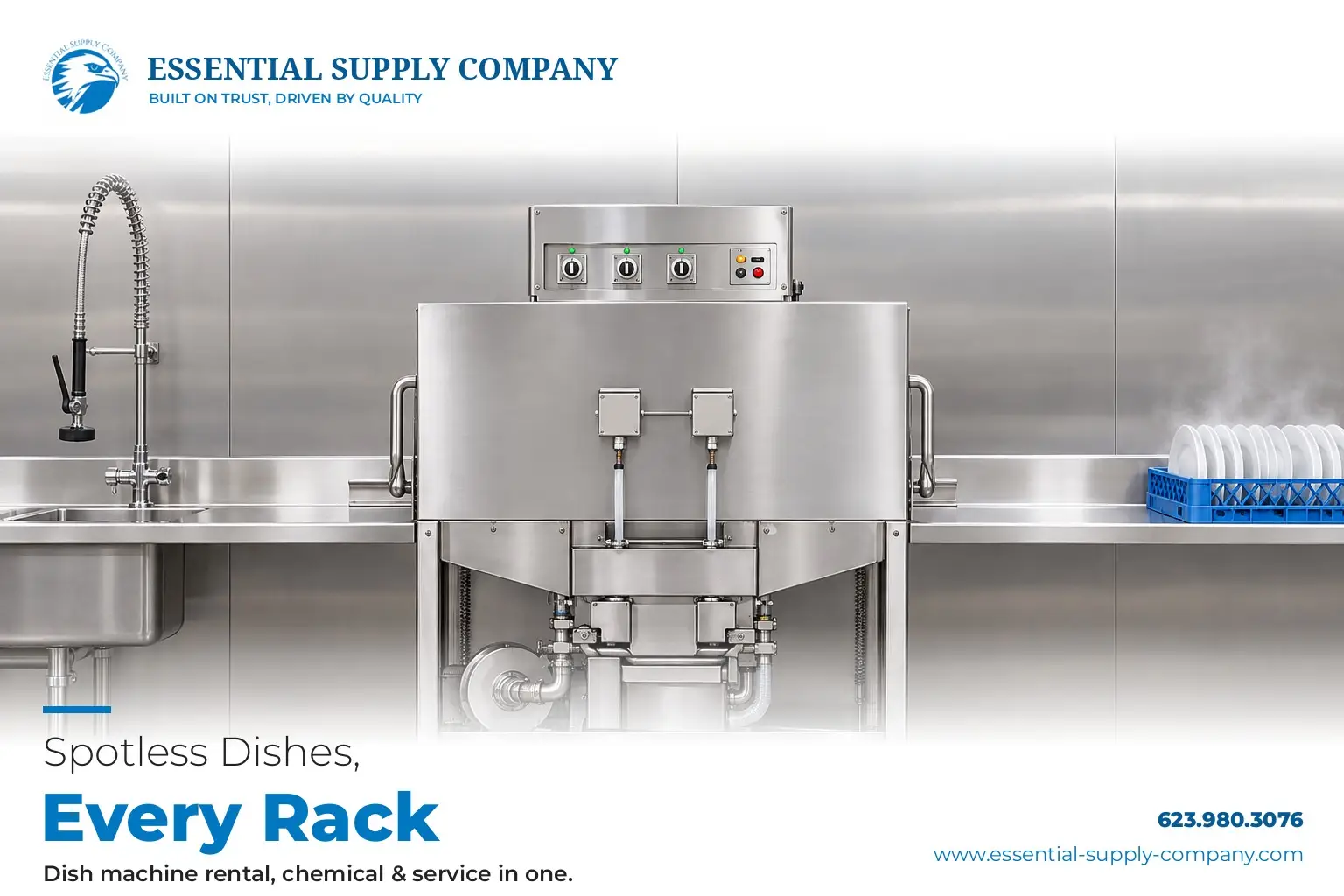
A dish machine lease and chemical program is more than a way to get a machine in the dish area. It is a way to keep one of the busiest parts of your kitchen working without adding another vendor, another delivery schedule, or another problem for your team to chase down.
When dishes back up, the impact reaches the whole operation. Servers wait for glassware. Prep runs short on pans. Guests notice when clean table settings are not ready. A good program connects the machine, the chemicals, the service, and the training so your dish area can keep pace with the shift.
What a Dish Machine Lease and Chemical Program Should Cover
A lease program should start with the right machine for your volume, space, and workflow. A small bar, a high-volume restaurant, and a hotel kitchen do not have the same needs. The goal is not to put the largest machine available in the room. It is to provide equipment that fits the operation and can handle the daily workload.
The chemical side matters just as much. Warewashing chemicals need to be matched to the machine, water conditions, dishware, and soil load in your operation. When the setup is right, your staff gets consistent cleaning results and spends less time rewashing items that should have come out clean the first time.
A complete program also includes dispensing equipment, routine service, and staff training. These pieces work together. A machine can be running, but if chemicals are not dispensing correctly or staff are unsure what to check, results can still fall short.
Why One Program Works Better Than Separate Vendors
Many kitchens treat the dish machine, chemicals, repair calls, and paper supplies as separate purchases. That can create gaps. One company installs the machine. Another drops off chemicals. A third handles repairs. When something goes wrong, it is not always clear who owns the problem.
With one coordinated program, the provider can see the full picture. If warewashing results change, the team can look at machine performance, chemical dispensing, water filtration, and staff procedures together. That leads to faster troubleshooting and fewer repeat issues.
It also simplifies purchasing. Your kitchen may already need dish chemicals, hand care, towels, tissue, trash liners, gloves, and to-go supplies. Combining recurring needs with one local supplier reduces the number of orders your team has to place and track. It can also make it easier to spot where supply spending is getting out of control.
The Operational Benefits of Leasing
Buying a commercial dish machine can make sense for some operations, especially when equipment ownership fits their long-term plans. But leasing is often a better fit for kitchens that want predictable support and less capital tied up in equipment.
A lease can give operators access to installed equipment without managing the entire process alone. It is especially useful when opening a new location, replacing an unreliable machine, or dealing with a growing dish load that the current setup cannot handle.
The value is not simply the machine itself. It is knowing there is a service team that understands the setup and can help when performance changes. That support matters during a busy meal period, when a minor issue can quickly become a major disruption.
Watch for Signs Your Current Setup Is Costing You
A dish area may need attention if staff regularly rewash dishes, glassware comes out spotted, chemicals run out unexpectedly, or the machine has repeated service issues. Long wait times for clean pans and racks are another clear sign that the equipment or workflow is not keeping up.
Water quality can also affect results and equipment performance. Water filtration service may help protect the machine and support more consistent warewashing, depending on the conditions in your facility. The right recommendation should come from looking at your operation, not from a one-size-fits-all package.
Service and Training Keep the Program Working
Even dependable equipment needs follow-up. Staff turnover, changing menus, different shift habits, and higher volume can all affect how the dish area performs. Regular check-ins help catch small problems before they turn into downtime or wasted chemicals.
Training should be practical and easy for busy employees to use. Staff need to know how to operate the machine correctly, recognize when results are off, and report concerns before the problem grows. They should not have to guess whether an issue is related to the machine, chemicals, or water.
Essential Supply Company brings equipment, chemical management, delivery, service, and supply support together for Arizona commercial kitchens. The team can also provide a price comparison to help operators see where consolidating supplies may reduce unnecessary spending.
A dependable dish area gives your team one less thing to worry about during service. Choose a program that takes responsibility for the equipment and the supplies behind it, then keep checking that it still fits the way your kitchen works. Built on Trust, Driven by Quality.