
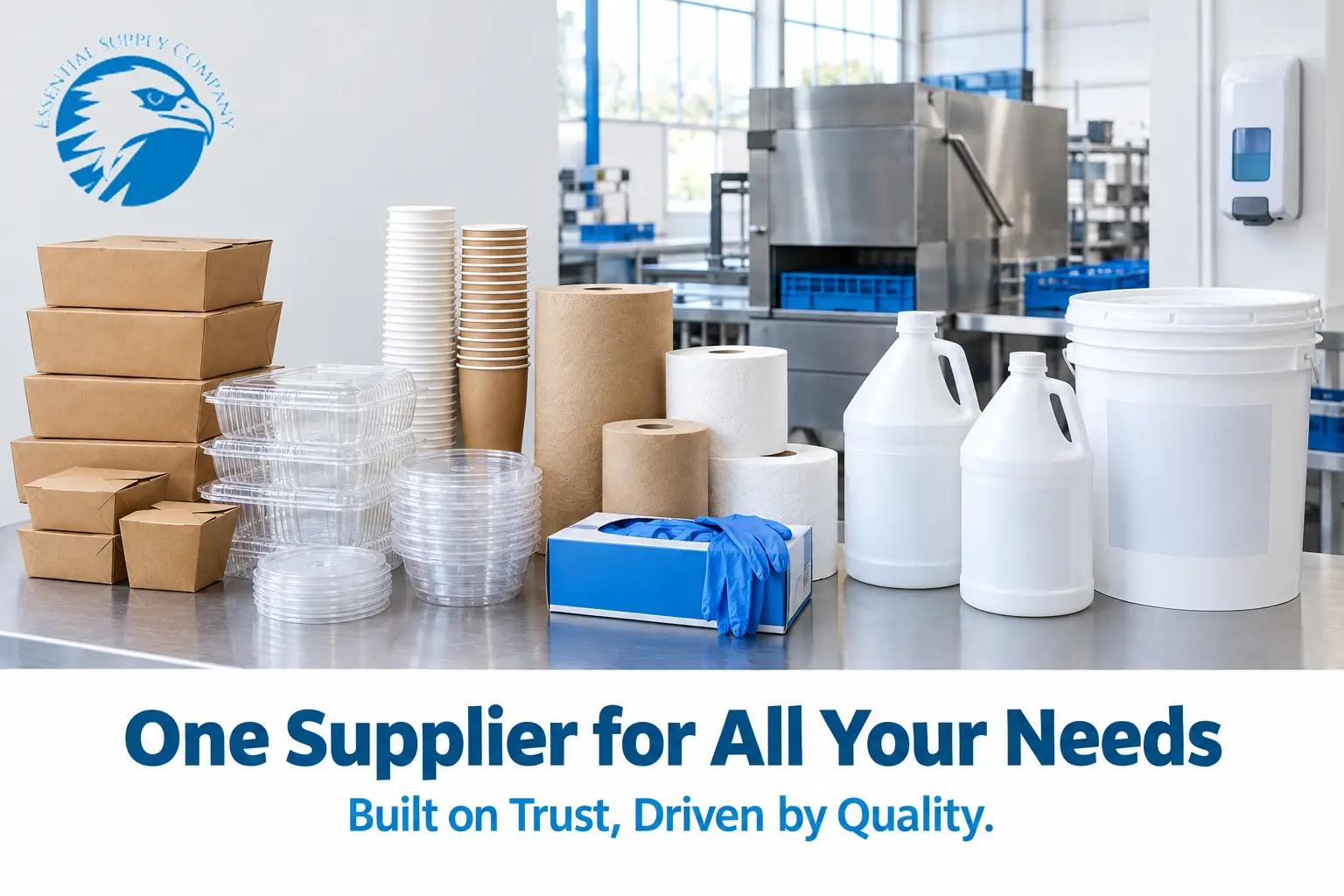
A dish machine stops during a busy meal period. Housekeeping is short on towels. The kitchen needs gloves and takeout containers before the next delivery window. When these needs are managed through separate vendors, a routine operational problem can turn into multiple calls, rush charges, and lost staff time. Working with one supplier for all needs gives facilities a more practical way to keep essential products, equipment, and service aligned.
For restaurants, hotels, schools, healthcare facilities, and other high-volume operations, consolidation is not just about receiving fewer invoices. It is about building a supply program that supports clean facilities, consistent guest or patient experiences, and a team that can focus on the work in front of them.
Why Multiple Vendors Create More Work
Most facilities do not add vendors because they want complexity. They add them over time. A chemical provider is selected for dishwashing products, a paper company handles towels and tissue, an equipment company services the dish machine, and another distributor fills gaps in foodservice disposables or janitorial supplies.
Each vendor may perform well in its own category. The issue is what happens between categories. Purchasing teams must manage separate ordering processes, delivery schedules, invoices, contacts, pricing structures, and minimum-order requirements. When something is missing, it is often unclear who owns the problem.
That fragmented structure also makes it harder to see total spending. A case price may look competitive, but it does not account for emergency purchases, excess inventory, delivery fees, staff time, or product waste caused by poor dispensing and inconsistent training. The true cost of a supply program shows up in daily operations, not just on a purchase order.
What One Supplier for All Needs Should Actually Mean
A single-source approach should not mean accepting a narrow product selection or settling for one-size-fits-all service. It should mean having one accountable partner who can coordinate the essential parts of your operation while recommending products and programs that fit your facility.
For an Arizona restaurant, that may include dish machine rental or service, warewashing chemicals, paper goods, gloves, food containers, floor care products, and scheduled delivery. For a hotel, it may also include laundry chemicals, housekeeping supplies, and floor-care support. A school or healthcare facility may place added emphasis on sanitation processes, dependable stock levels, and staff training.
The best program is built around how your operation runs. How many meals are served? How quickly do paper supplies move? Which products are stored in limited space? When can deliveries be received without disrupting guests, students, residents, or staff? Those details determine the right inventory plan.
A supplier should also take responsibility when conditions change. A seasonal restaurant may need a different delivery frequency during peak months. A hotel may need extra support before a large event. A facility dealing with a machine issue needs a technical response, not a referral to another vendor.
The Operational Benefits of Consolidation
Consolidating essential categories creates value in several ways. The most immediate benefit is time. Instead of contacting several companies to place orders or solve shortages, managers have one account team that understands the facility and can coordinate the response.
Cost control improves when purchases are reviewed as a whole. Chemical management can reduce overuse. Product substitutions can be evaluated before they create a performance issue. Delivery schedules can be adjusted to avoid both stockouts and overloaded storage rooms. Clear pricing and fewer unexpected fees make it easier to forecast operating expenses.
Reliability matters just as much. A kitchen cannot wait days for dish machine support, and a housekeeping department cannot maintain standards without the right towels, tissue, liners, and chemicals. Local inventory and responsive service can make the difference between a quick correction and an interruption that affects guests, staff, and revenue.
Consolidation also strengthens compliance and cleanliness. When chemicals, dispensers, equipment, and staff training are treated as connected parts of one program, teams are more likely to use products at the correct concentration and for the intended application. That helps protect surfaces, improve cleaning results, and support sanitation requirements.
Start With a Supply and Service Audit
Before moving to a consolidated supplier, review what is actually being used. The goal is not simply to combine every invoice under one name. It is to find the places where the current process creates waste, delay, or uncertainty.
A useful audit looks at four areas:
- Product usage, including chemical consumption, paper pull rates, disposable usage, and frequently depleted items.
- Equipment performance, especially dish machines, laundry systems, dispensers, and floor-care equipment that affect daily output.
- Delivery and storage practices, including shortages, overstock, order lead times, and space constraints.
- Service requirements, such as employee training, emergency support, preventive maintenance, and account communication.
This review often reveals opportunities that are easy to miss. For example, recurring chemical orders may be high because employees are manually dispensing more product than required. A facility may be carrying excessive paper inventory because delivery timing is inconsistent. A dish machine may be producing poor results because of an equipment or water-condition issue, not because staff chose the wrong detergent.
A knowledgeable supplier should use this information to recommend a practical plan, not push unnecessary products. Sometimes the right answer is a different dispenser or delivery frequency. Sometimes it is staff retraining. Sometimes it is keeping a critical item in local inventory so the facility has a dependable backup.
Where a Single-Source Model Needs Flexibility
One supplier is most effective when the supplier has both category breadth and local operating discipline. Product breadth alone is not enough. A large catalog does little good if your team cannot get a response when a machine fails or an essential item is needed quickly.
At the same time, not every purchase has to be forced into a single-source agreement. Specialty items, unique equipment specifications, or corporate purchasing contracts may require separate arrangements. A capable supply partner will be direct about where consolidation creates value and where another solution makes more sense.
The key question is accountability. If a delivery is short, a chemical program is not performing, or a dish machine requires service, does one team have the ability and responsibility to help solve it? That is the difference between a company that sells products and a partner that supports operations.
Build the Program Around Daily Reality
A consolidated purchasing program works best when it is reviewed regularly. Usage changes. Menus change. Occupancy changes. New employees need training, and storage space may be reassigned. Regular supply audits keep the program aligned with current conditions instead of relying on last year’s order history.
This is especially valuable for facilities with high turnover or multiple departments. Kitchen managers, housekeeping leaders, maintenance teams, and purchasing staff often see different parts of the same problem. A service-focused supplier can help connect those needs so the solution does not create a new burden for another department.
Essential Supply Company approaches this work as an operating partnership, combining essential products with scheduled delivery, equipment support, chemical management, and personal account service. The objective is straightforward: keep facilities supplied, clean, compliant, and ready to serve.
The right supplier relationship should make the workday quieter. When products arrive on time, equipment is supported, staff know what to use, and costs are easier to understand, managers can spend less time chasing routine problems and more time running a facility their teams and customers can rely on.