
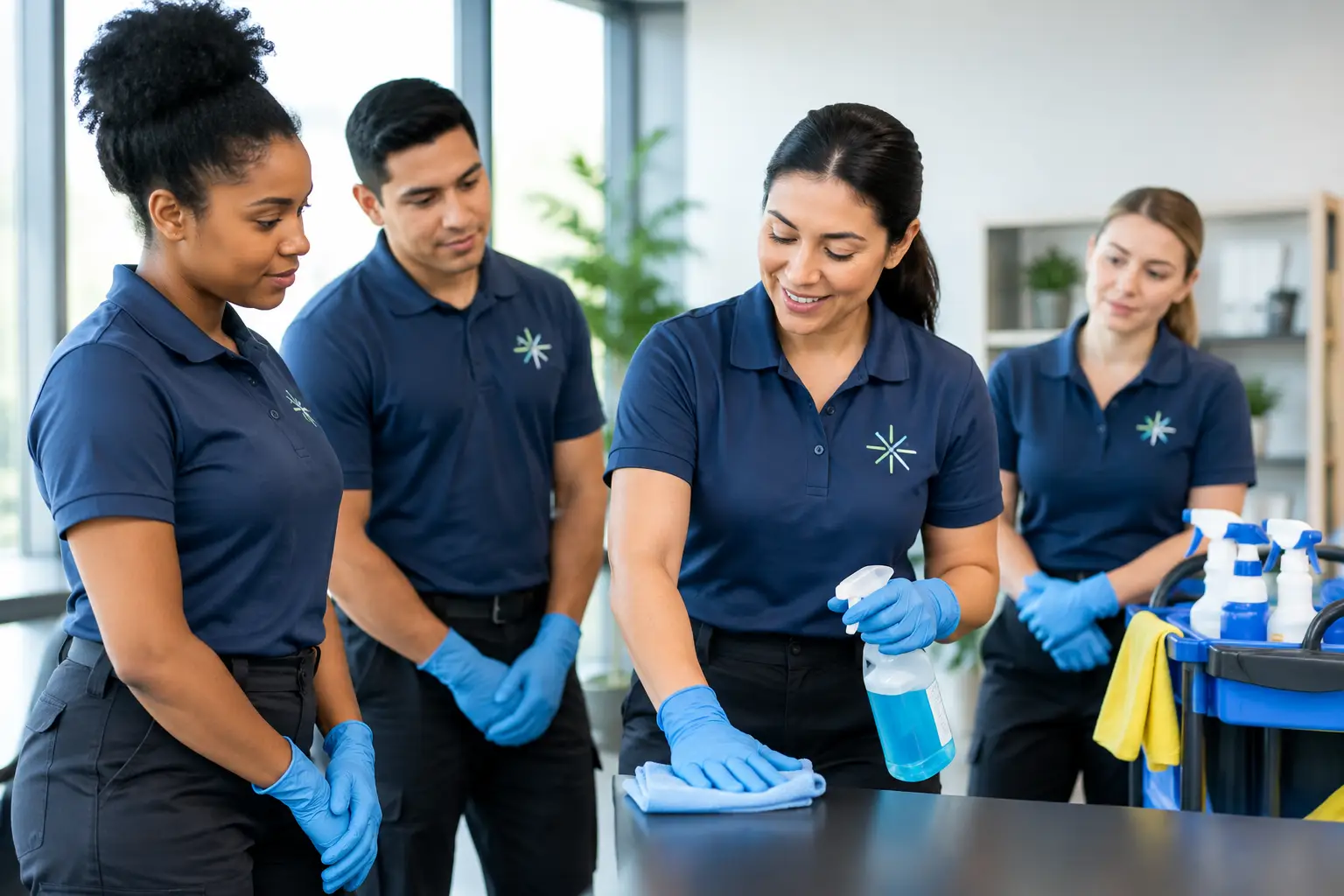
A missed restroom detail, a sticky dining-room floor, or a sanitizer mixed at the wrong ratio can quickly become a guest complaint, safety issue, or failed inspection. Commercial cleaning staff training gives teams a repeatable way to protect the facility, use supplies correctly, and complete work to the same standard on every shift.
For restaurants, hotels, schools, healthcare settings, and high-traffic facilities, training is not a one-time orientation task. Turnover, changing products, seasonal volume, and new equipment all create opportunities for standards to slip. The strongest programs make correct cleaning practices part of the daily operation, not a binder that sits in an office.
Start With the Work That Affects Operations Most
Training should reflect the actual environment your employees clean. A hotel housekeeping team, a school custodial crew, and a restaurant closing team may all use disinfectants, paper products, floor-care tools, and PPE, but their highest-risk tasks are different.
Begin by identifying the areas where inconsistency creates the biggest operational cost. In foodservice, that may include dish area sanitation, restroom cleaning, floor safety, and proper handling of chemicals near food-contact surfaces. In hospitality, it may be room turnover, laundry handling, lobby appearance, and odor control. In healthcare and education, high-touch surface procedures, cross-contamination prevention, and documented cleaning schedules often deserve the most attention.
A useful training plan answers simple questions employees face every day: What gets cleaned? How often? Which product and tool should be used? How long must the product remain on the surface? What should be recorded or reported before leaving the area?
When those answers are clear, supervisors spend less time correcting preventable mistakes and more time managing quality, staffing, and guest service.
Make Chemical Training Specific, Not Generic
Chemical misuse is one of the most common and costly training gaps in commercial facilities. Using too much product can leave residue, damage surfaces, increase spending, and create safety concerns. Using too little may not deliver the required cleaning or sanitizing result.
Employees need more than a reminder to read labels. They need hands-on instruction using the actual dispensing systems, bottles, dilution controls, and chemicals installed at the facility. Show staff how to verify that dispensers are working, label secondary containers, wear the right protective equipment, and store products away from incompatible materials.
Contact time deserves special attention. A disinfectant cannot do its job if it is wiped off immediately. Likewise, a cleaner is not automatically a sanitizer or disinfectant. Staff should understand the difference between cleaning visible soil, sanitizing food-contact surfaces, and disinfecting designated non-food-contact surfaces.
The right approach depends on the product, the surface, and the facility’s requirements. That is why chemical training should be tied to approved products and documented procedures, rather than relying on habits learned at a previous job.
Build Commercial Cleaning Staff Training Around Demonstration
People learn cleaning tasks faster when they can see the expected result. A supervisor explaining how to mop a floor is helpful. Demonstrating edge work, solution changes, wet-floor signage, machine setup, and final inspection is better.
Use a simple show-do-check process. First, a trainer demonstrates the task and explains the key steps. Then the employee performs the task while the trainer observes. Finally, the trainer checks the completed area against a defined standard and provides immediate feedback.
This method is especially valuable for floor care, warewashing, laundry chemicals, restroom procedures, and equipment cleaning. These jobs have details that are easy to overlook in written instructions. A staff member may know how to operate a machine but still miss daily maintenance that prevents breakdowns or poor results.
Photos can also help establish a shared standard. Show what a properly stocked restroom looks like, what a finished dining area should look like, and what requires follow-up. For multilingual teams, visual job aids and bilingual instruction can improve comprehension without lowering the standard.
Train for Sequence, Not Just Individual Tasks
Cleaning quality often breaks down because tasks happen in the wrong order. A team may clean a surface and then contaminate it again with a dirty cloth, or mop a floor before nearby work is complete. Teaching sequence helps staff work faster while reducing rework.
A practical sequence usually moves from cleaner areas to dirtier areas, from high surfaces to low surfaces, and from dry work to wet work. Color-coded microfiber cloths, mop heads, and tools can reinforce separation between restrooms, kitchens, patient areas, and general spaces. The system only works, however, if employees know what each color means and where used tools belong after service.
Training should also cover shift handoffs. If an employee finds an empty towel dispenser, a leaking chemical bottle, a damaged floor mat, or dish machine performance issue, they need a clear process for reporting it. A cleaning team cannot maintain standards when problems are noticed but never communicated.
Use Checklists as Verification Tools
Checklists are valuable when they confirm work, not when they replace judgment. A rushed employee can check a box without actually cleaning a surface. The better approach is to keep checklists short, location-specific, and connected to supervisor inspections.
A restroom checklist might verify that fixtures were cleaned, dispensers were stocked, floors were dry, trash was removed, and the room was inspected before reopening. A dish area checklist can confirm chemical levels, machine temperatures or indicators, clean racks, drain maintenance, and end-of-shift shutdown steps.
Avoid creating one oversized form for the entire facility. Separate forms by area and frequency so employees can complete them during normal work. Daily, weekly, and periodic deep-cleaning items should be easy to distinguish.
Managers should review patterns, not just individual forms. If a recurring issue appears in one building, on one shift, or with one product, that is a coaching opportunity. It may also point to a supply problem, equipment issue, unrealistic labor allocation, or unclear instruction.
Reinforce Training After the First Week
Initial training sets expectations. Reinforcement keeps those expectations from fading during busy service periods, staff changes, and schedule pressure. Short coaching moments are often more effective than waiting for a formal annual retraining session.
Supervisors can use pre-shift huddles to address one focused topic: correct glove use, proper mop-bucket setup, safe chemical storage, or a recent quality concern. Keep the message practical and connected to the day’s work. Employees are more likely to remember training when they understand the reason behind it, such as preventing slips, avoiding guest complaints, or keeping a food-contact surface safe.
Refresher training should also follow changes. New chemicals, new dispensing equipment, a different floor finish, or an updated cleaning schedule all require clear instruction before the change reaches every shift. This is where a responsive supply partner can reduce disruption by helping teams understand product use, equipment care, and replenishment needs.
Measure Results That Matter
A cleaning training program should improve more than employee confidence. Look for operational results: fewer chemical overuse issues, reduced supply waste, fewer slip-and-fall risks, better inspection scores, fewer guest complaints, and less equipment downtime.
Labor efficiency matters too. If employees repeatedly search for supplies, remake diluted chemicals, or redo missed work, the problem may be process design rather than effort. Consistent stocking, organized storage, dependable deliveries, and the right products at the point of use give trained employees a fair chance to succeed.
Essential Supply Company works with Arizona operators who need cleaning programs that hold up under real service demands. Training, chemical management, supply availability, and equipment support work best when they are planned together rather than managed as separate problems.
The goal is not to make training longer. It is to make every shift more predictable: employees know the standard, supervisors can verify it, and your facility stays ready for guests, inspections, and the next busy day.