
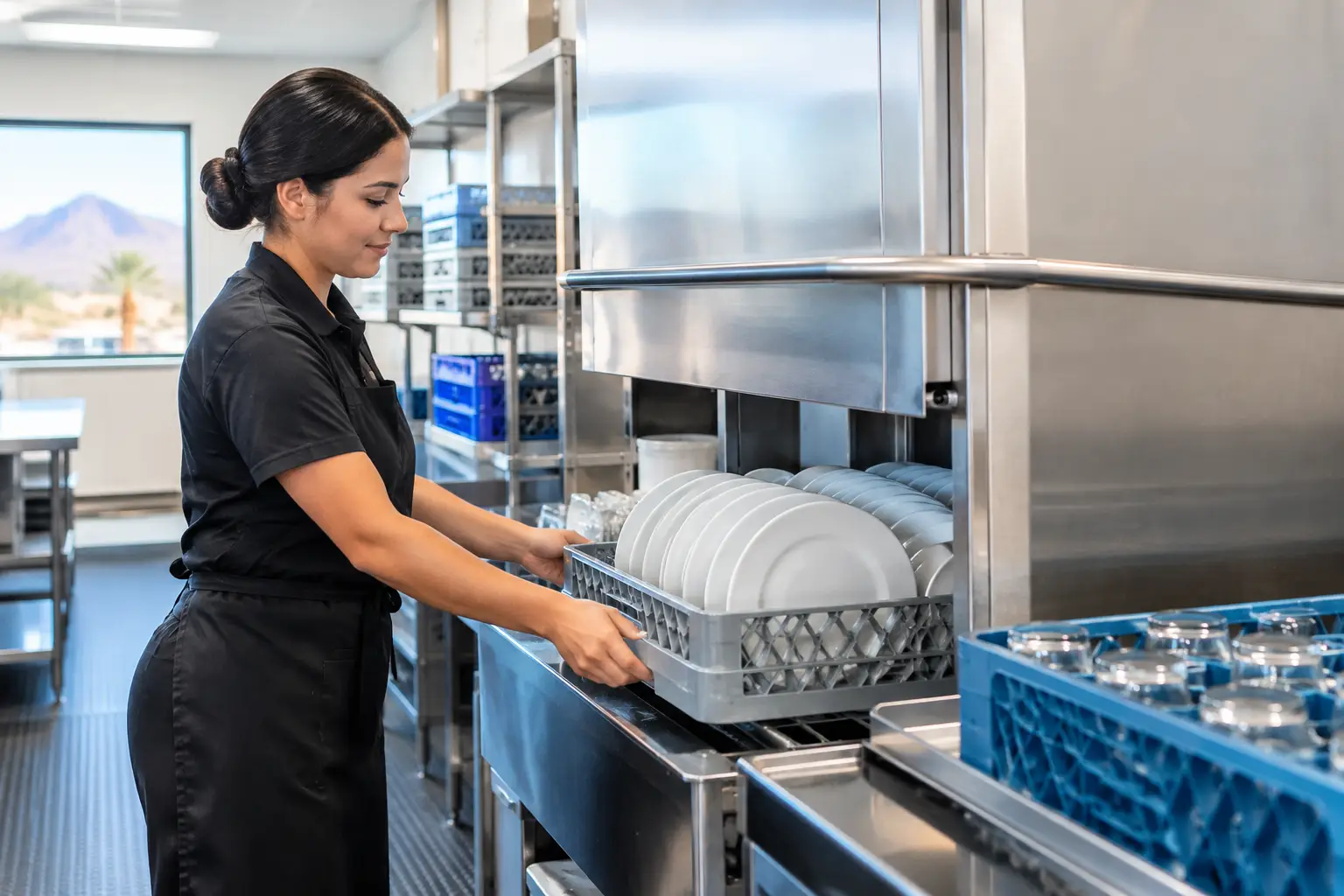
A lunch rush does not slow down because the dish machine is down, temperatures are off, or racks are coming out with food still on them. For restaurants, hotels, schools, healthcare facilities, and other high-volume operations, commercial dish machine rental Phoenix programs can turn a major capital expense and service burden into a managed part of daily operations.
The right rental program is not simply a machine delivered to the back door. It should give your team dependable warewashing performance, the right chemicals, staff guidance, responsive repair support, and a clear monthly cost. When those pieces work together, dishwashing becomes less of a daily risk and more of a reliable process.
Why Phoenix Operations Choose Dish Machine Rental
Buying a commercial dish machine can make sense for some established operations, especially when ownership fits a long-term equipment strategy. But purchasing also requires a significant upfront investment, and the owner is responsible for maintenance planning, repairs, water-quality concerns, chemical compatibility, and eventual replacement.
Rental changes that equation. Rather than tying up capital in equipment, operators can put funds toward staffing, inventory, renovations, or other immediate needs. A predictable monthly structure also makes budgeting easier for facilities that need to control operating costs without cutting corners on sanitation.
This matters in Phoenix, where high-volume kitchens often operate through long service windows, seasonal demand swings, and heavy turnover. A dish machine must keep pace with the operation it serves. If it is undersized, poorly maintained, or paired with the wrong detergent and rinse additive, the result can be slower dish return, spotty glassware, rewash labor, and frustrated staff.
A rental program is especially practical for new restaurant openings, renovations, temporary kitchens, expanding banquet operations, and facilities replacing an unreliable machine. It can also be the better choice when an operator wants one accountable partner for equipment, chemicals, service, and ongoing support.
What a Commercial Dish Machine Rental Should Include
A low monthly number alone does not define value. Before choosing a commercial dish machine rental Phoenix provider, look closely at what happens after installation. The machine is only one part of a working warewash system.
Equipment matched to actual volume
A small café, a fast-paced restaurant, a hotel banquet kitchen, and a school cafeteria do not have the same warewashing needs. The right machine depends on meal volume, peak-hour rack counts, available space, utilities, dish mix, and labor flow.
A machine that looks economical but cannot keep up will cost more through labor and delays. On the other hand, installing more capacity than the operation needs can increase utility use and occupy valuable kitchen space. A knowledgeable provider should assess the operation before recommending an undercounter, door-type, conveyor, or other commercial dish machine configuration.
Chemical management that supports clean results
Warewashing chemicals affect sanitation, appearance, machine performance, and cost per rack. Detergent must remove food soil effectively. Rinse additive must support fast drying and reduce spotting. Sanitizer levels and final rinse temperatures must meet the applicable requirements for the facility and machine type.
Chemical dispensing should be calibrated, monitored, and replenished before products run out. This is where a managed program can reduce waste. When dispensing is inconsistent, teams may overuse product to compensate for poor results, adding cost without fixing the underlying issue.
Installation, training, and water-quality planning
A dish machine cannot perform as intended if site conditions are ignored. Water pressure, drainage, electrical requirements, ventilation, and available counter space all deserve attention before delivery. Phoenix-area water conditions can also affect scale buildup and wash results, so the equipment and chemical program may need to account for water hardness.
Staff training is equally important. Dishroom employees should know how to load racks correctly, check temperatures or sanitizer concentration, clear scrap efficiently, clean screens, and recognize signs that service is needed. Clear routines help protect the machine and prevent small problems from becoming a costly interruption.
Responsive service when the machine stops
Downtime is the point when a rental relationship proves its value. A provider should offer clear service expectations, access to technical help, and local support capable of responding when operations cannot wait. Ask how emergency calls are handled, what common repairs are covered, and whether the provider carries local parts and replacement options.
For many facilities, the best program is one with 24/7 technical and emergency support. A machine issue at the end of a dinner rush, before a catered event, or during a hospital meal service cannot always wait until the next business day.
Compare Rental Terms Before You Commit
Rental agreements vary, so operators should compare more than the monthly payment. Ask what is included in the agreement and what could create an additional charge. Transparent terms protect both the facility and the supplier relationship.
Review whether installation is included, how preventive maintenance is handled, and what service calls cover. Confirm the expected chemical and supply arrangement, since warewashing performance depends on an integrated system. It is also useful to understand the agreement length, upgrade options, and what happens if the facility’s volume changes.
The lowest-priced offer is not always the lowest operating cost. A lower rental payment may exclude service, require separate chemical sourcing, or leave the operation waiting for outside repair support. A slightly higher monthly program can be the better value if it reduces rewash labor, avoids emergency repair bills, and keeps kitchen service moving.
Signs Your Current Dishwashing Setup Is Costing You
Most dishroom problems show up in daily work before they appear on a financial report. Staff may be rewashing plates, hand-polishing glassware, waiting for racks to cycle, or using extra chemicals in an effort to improve results. Managers may see inconsistent sanitation checks, recurring leaks, frequent service calls, or complaints about dish availability during peak periods.
These issues can affect more than the kitchen. Guests notice cloudy glassware and stained flatware. Healthcare and senior living teams need dependable sanitation procedures. Schools and institutional kitchens need throughput that supports fixed meal schedules. When warewashing falls behind, every downstream task becomes harder.
A rental evaluation can be useful even if the current machine still operates. The goal is not always immediate replacement. It may reveal that a chemical adjustment, staff retraining, maintenance visit, or different rack flow will improve results. If the machine is nearing the end of its useful life, planning ahead prevents a rushed decision after a breakdown.
Build a Better Dishroom Routine
Equipment performs best when the dishroom follows a simple, consistent process. Scrape and pre-rinse items before loading, without using excessive water. Keep spray arms, screens, and scrap trays clean. Load racks so water can reach every surface, and avoid overstacking cups, bowls, or utensils.
At the beginning and end of each shift, staff should complete the cleaning and checks required for the machine. Managers should also watch for trends: declining wash quality, unusual noise, longer cycle times, excess foam, leaking, or changes in final rinse temperature. Reporting those signs early can prevent a complete shutdown.
It also helps to consolidate related supplies with one service partner. Warewashing chemicals, towels, gloves, foodservice disposables, and janitorial products all affect the same daily operation. Essential Supply Company helps Arizona facilities simplify that purchasing while providing equipment programs, scheduled delivery, local inventory, and hands-on support.
Choose Support That Keeps Service Moving
A commercial dish machine rental should give your operation more than a machine and an invoice. It should provide a dependable plan for cleanware, sanitation confidence, cost control, and fast help when the unexpected happens.
Before your next busy season, opening, or equipment failure, look at the real demands on your dishroom. A properly matched machine, managed chemical program, trained staff, and accountable local service team can keep one of the busiest areas in your facility working exactly as it should.