
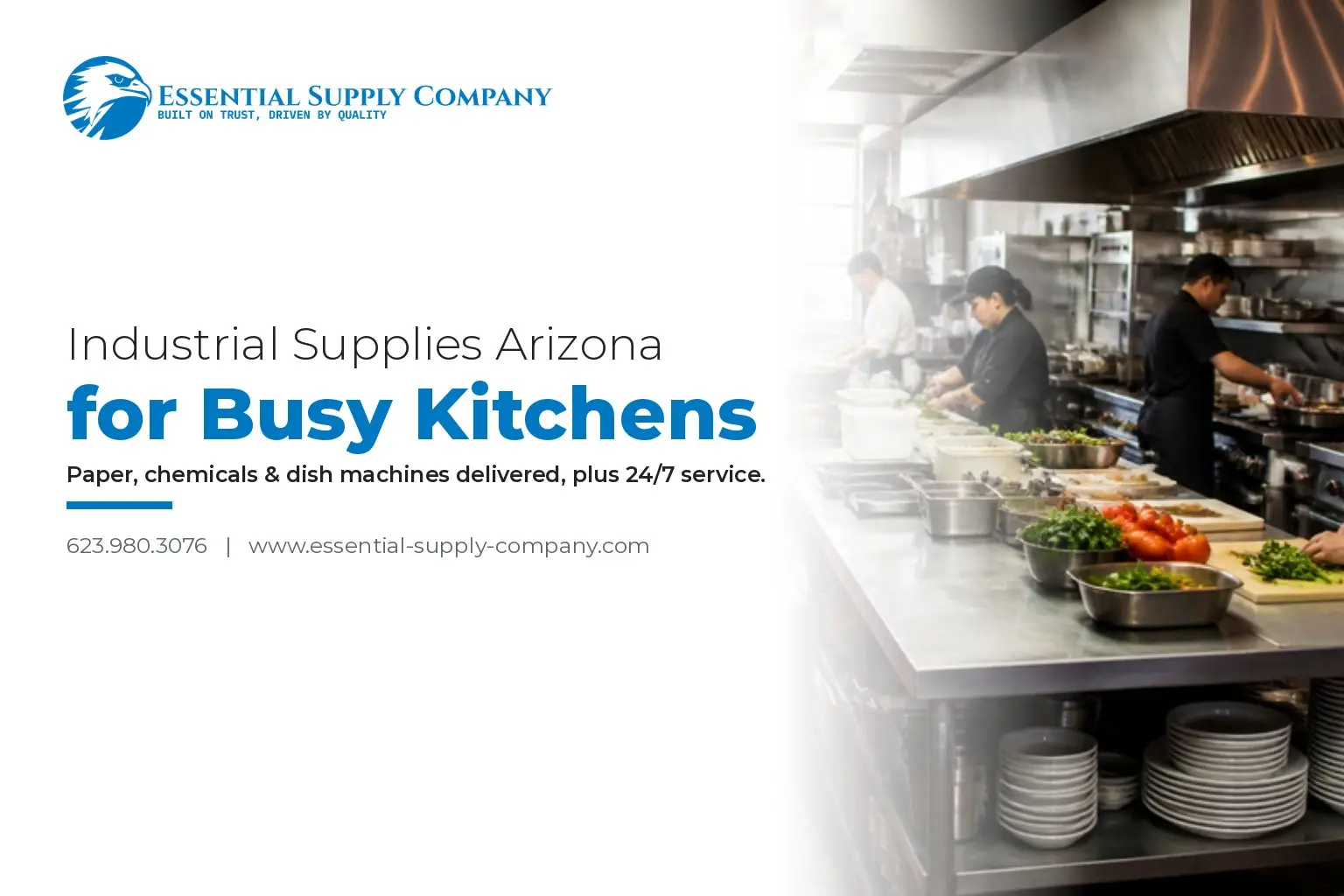
The lunch rush is the wrong time to find out the dish machine is down, the towel dispenser is empty, or the last case of takeout containers was used the night before. For restaurants, hotels, and facility teams, industrial supplies Arizona operations depend on are not background purchases. They are what keep the kitchen clean, the service line moving, and the team ready for the next shift.
The challenge is not simply finding products. It is managing the everyday details around them: ordering before stock runs low, choosing products that fit the operation, controlling waste, maintaining equipment, and getting help when a problem stops the work. A supply partner should make those jobs easier, not add another vendor relationship to manage.
What Reliable Industrial Supplies in Arizona Should Cover
A commercial operation uses a wide range of supplies, but they all connect to the same outcome: a cleaner, safer, more efficient workplace. Warewashing chemicals, paper towels, hand soap, gloves, floor-care products, tissue, napkins, and foodservice disposables may be ordered separately, yet they affect the same daily operation.
When those categories come from multiple vendors, small gaps can turn into expensive problems. One supplier may have chemicals but no service for the dispensing equipment. Another may deliver paper products but not carry the right to-go packaging. A third may handle the dish machine, but not the water filtration service that supports its performance. The kitchen manager ends up chasing orders, invoices, and service calls instead of managing the floor.
One supplier for the entire operation simplifies purchasing. It also gives the supplier a better view of what the operation actually uses. That makes it easier to spot duplicate products, inconsistent ordering patterns, and products that are creating unnecessary waste.
Supply needs change with the operation
A busy restaurant may need frequent replenishment of gloves, napkins, towels, and chemicals. A hotel may have heavier laundry demands, public restroom supply needs, and more floor-care requirements. Schools, healthcare facilities, catering teams, bars, and other commercial operations each have their own pace and pressure points.
There is no single order schedule that works for every account. The right delivery plan depends on storage space, volume, seasonality, and how quickly key items move. Flexible schedules matter because overstocking creates clutter and ties up cash, while understocking puts staff in a difficult position when customers are waiting.
Dish Machines Need More Than a Product Order
A commercial dish machine is one of the most important pieces of equipment in a kitchen. When it is working well, clean wares keep moving back to the line, bar, or dining room. When it is not, the team loses time quickly. Staff may be forced into manual washing, clean dishes can become scarce, and service can slow down.
That is why dish machine support should include more than dropping off chemicals. Operators need a partner that can help with machine rental or purchase, installation, repair, maintenance, chemical dispensing, and staff training. Those services work together. A machine can be mechanically sound but still create problems if chemicals are not managed properly or the staff has not been shown the correct daily operating process.
Water quality can also affect warewashing results and equipment performance. Water filtration service belongs in the same conversation because it supports the equipment the kitchen relies on. Instead of treating every issue as a separate vendor problem, a coordinated service program looks at the full system.
The goal is not to make your team equipment experts. It is to give them a dependable point of contact when the machine, chemicals, or water service need attention.
Control Consumable Costs Before They Drift
Paper, chemicals, gloves, and disposables often look like small line items until the monthly total is reviewed. Costs tend to drift when products are ordered out of habit, when different shifts use different items, or when staff reach for more product than the task requires. Waste is not always obvious in the moment, but it adds up across a busy operation.
A supply audit can help bring those patterns into view. It starts with understanding what is being used, how often it is ordered, where it is stored, and whether the product matches the job. Sometimes the answer is a different package size. Sometimes it is a better delivery schedule. Sometimes it is simply organizing the supply area so staff can find the approved product instead of opening another case.
Chemical management deserves particular attention. Commercial cleaning and warewashing products need consistent dispensing and clear staff training. When the system is set up for the operation and followed up over time, managers have more control over use and ordering. That supports cleanliness while reducing the guesswork that leads to overuse.
A free price comparison is also useful when reviewing industrial supplies in Arizona. The value is not in a vague promise. It is in seeing the current products and costs next to an organized supply plan, so the operator can make a practical decision based on the operation’s real needs.
Delivery Reliability Is Part of the Service
A delivery is only helpful if the products arrive in a way that supports the work. Commercial kitchens and facilities have limited space, busy receiving areas, and changing demand. They need communication, consistent follow-through, and an inventory plan that accounts for the products that cannot run out.
Local inventory makes a difference when supply needs shift. It gives Arizona operators a nearby source for routine replenishment and service support rather than leaving them to wait on a distant distribution process. No order minimums and no delivery fees can also make ordering more practical when a smaller restock is needed between larger deliveries.
The real benefit of scheduled route delivery is not just convenience. It creates a rhythm. The operator knows supplies are being reviewed and replenished regularly, while the supplier gets to know the account well enough to recognize changing needs. If a restaurant adds more takeout business, for example, its packaging needs may change long before the owner has time to rebuild every order from scratch.
Training Helps Products Work the Way They Should
The right supplies still depend on the people using them. Turnover, new menu formats, seasonal volume, and changing procedures can create training gaps. Those gaps show up as wasted paper, poor chemical control, inconsistent cleaning results, and avoidable calls for support.
Training should be direct and useful. Staff need to understand which products belong in which areas, how dispensing equipment supports consistent use, and what daily habits help keep dish and laundry operations on track. Managers need confidence that the team has been shown the process and has someone to call when questions come up.
Follow-up matters as much as the first visit. A supplier that checks in can catch recurring supply issues, identify equipment concerns early, and adjust service as the operation changes. That is the difference between a transaction and an ongoing program.
Choose a Partner That Takes Ownership
When evaluating industrial supply support, ask a few practical questions. Can the supplier provide the products the operation uses every week? Can it support the dish machine, chemicals, water filtration, and cleaning program in one relationship? Does it offer local delivery, account support, training, and emergency service when the operation needs help?
It also helps to ask how the supplier reviews spending and usage over time. The lowest unit cost does not always create the lowest operating cost if deliveries are inconsistent, products are wasted, or equipment issues disrupt service. A better program balances product cost with reliability, service, and the time your team gets back.
Essential Supply Company brings supplies, equipment, and service together for commercial operators who need fewer loose ends to manage. Built on Trust, Driven by Quality. The focus is simple: deliver what the operation needs, keep critical systems supported, and stay involved after the first order.
A well-run supply program gives your team one less thing to worry about during service. Start with the items that create the most disruption when they run out or fail, then build a delivery and service plan around how your operation actually works.