
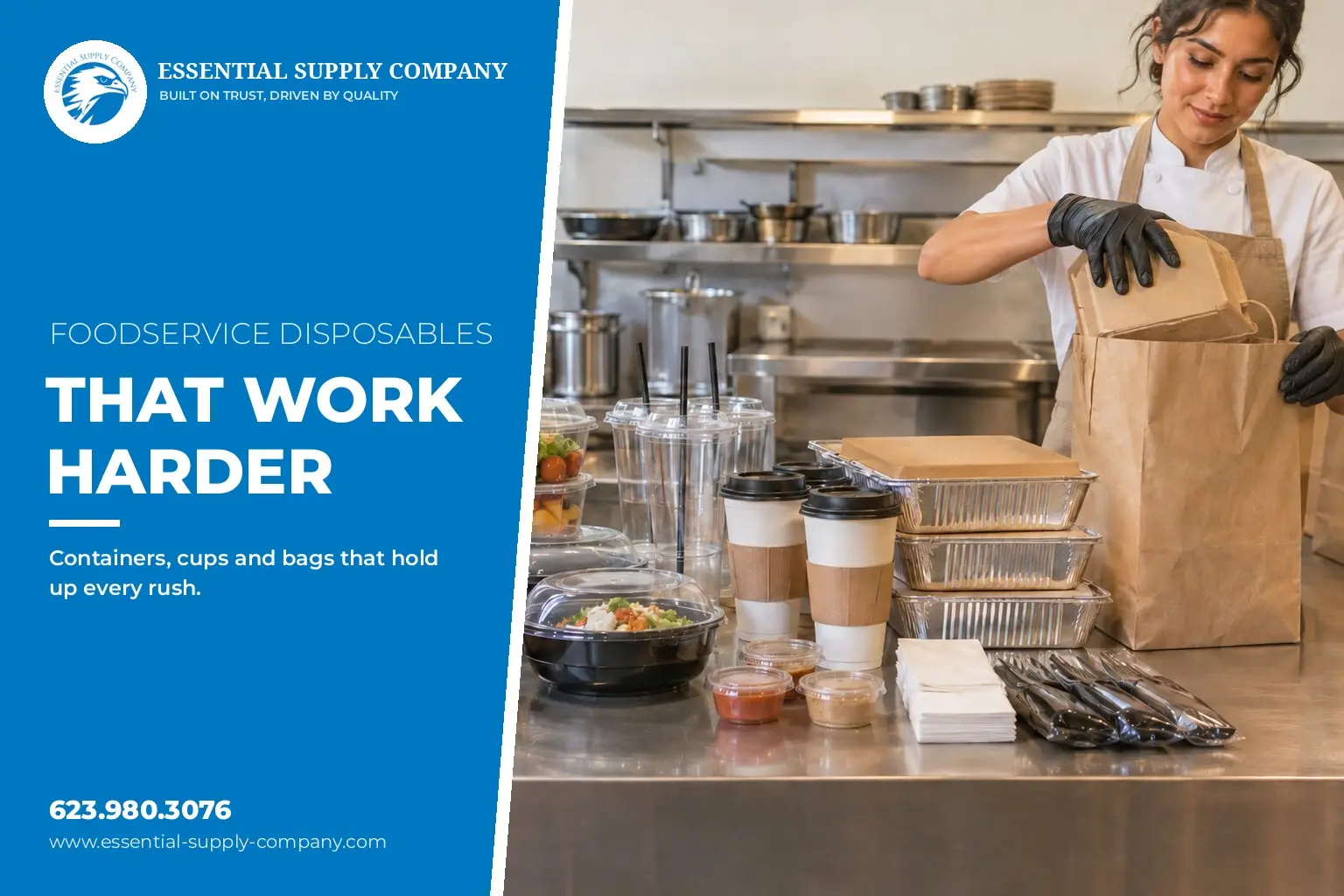
A busy lunch rush can expose a weak supply plan fast. The right foodservice disposables keep orders protected, guests comfortable, and employees moving. The wrong mix leads to leaking containers, missing lids, wasted product, and a back-of-house team improvising when they should be serving customers.
For restaurants, hotels, bars, caterers, schools, and healthcare food operations, disposables are not an afterthought. They are part of the guest experience, food quality, sanitation routine, and operating cost. Choosing them well starts with looking at how they perform in your actual operation, not just what they cost by the case.
Foodservice Disposables Have a Job to Do
Every disposable item should solve a specific problem. A container needs to hold the food it was designed for. A lid needs to stay in place during transport. A napkin needs to do more than look good in a dispenser. Gloves, film, bags, cups, cutlery, and portion containers all affect how smoothly a shift runs.
That sounds basic, but many operations end up with supplies that do not fit their menu or workflow. A thin container may work for a cold side dish but fail with a hot, saucy entrée. A takeout bag may be the right size until it has to carry stacked containers and drinks. Film that tears poorly or does not cover pans securely can slow prep and create avoidable food waste.
The goal is not to buy the heaviest product in every category. It is to match the product to the work. Overbuying on material adds cost. Underbuying creates failures that cost more in remakes, refunds, labor, and guest frustration.
Start With the Menu and Service Model
Your menu should drive your disposable choices. Review what customers order, how it travels, and how long it sits before it is eaten. A counter-service restaurant with quick pickup has different needs than a full-service restaurant adding delivery, or a hotel handling banquet orders.
Hot foods, cold foods, fried foods, sauces, beverages, desserts, and family meals each create different demands. Test whether containers stack securely, whether lids fit consistently, and whether the package keeps food presentable from kitchen to handoff. If customers often carry meals in a car, stability matters as much as appearance.
Also consider where the item is used. A prep cook needs reliable film and gloves that support efficient food handling. A server needs napkins and takeout packaging that are easy to grab during a rush. A catering team may need larger packaging that holds up through loading, transport, and setup. One product does not have to do every job.
Look for Repeat Problems
Your team already knows where disposable supplies break down. Ask about the issues that show up repeatedly: lids that pop off, cups that leak, gloves that tear, bags that split, or napkins that run out before the next shift. These are not minor annoyances. They interrupt work and can damage the customer experience.
A simple supply review can help separate a one-time issue from a pattern. Look at what gets reordered early, what employees double up on, and what ends up discarded. The answer may be a different item, a better case quantity, or a more dependable delivery schedule.
Control Cost Beyond the Case Price
Case price matters, but it is only one part of the cost. A lower-cost container can become expensive if employees use two instead of one, add extra bags for support, or spend time replacing failed packaging. The same is true for paper products. If a dispenser produces too much material at once or staff need several sheets to dry hands, usage climbs quickly.
Track how much product your operation uses over a normal week or month. Then compare that use against sales volume, takeout volume, catering events, and seasonal changes. This gives you a more useful picture than simply comparing the price on two cases.
Portion control also matters. Standardizing cup sizes, lid types, cutlery packs, and napkin placement can reduce unnecessary use without making guests feel shortchanged. The key is consistency. When employees have to guess what belongs with an order, supplies leave the building faster and orders become less consistent.
Keep the Right Inventory on Hand
Running out of a basic item during service is a preventable problem, but it happens often when ordering is spread across multiple vendors or handled only when shelves look low. Foodservice disposables can take up valuable storage space, so the answer is not always ordering more. It is ordering with a plan.
Set practical par levels for high-use items based on your normal volume and delivery schedule. Keep a buffer for products that can stop service if they run out, such as containers, lids, bags, gloves, hand towels, and restroom tissue. Review those levels when your menu changes, when you add delivery, or when business picks up for events and holidays.
Storage affects performance, too. Keep cases organized, dry, and easy to rotate. Mixed lids, damaged cases, and supplies buried behind other inventory create waste before an item ever reaches a guest. Clear labeling and a designated storage area make it easier for every shift to find what it needs.
Simplify Ordering Where You Can
Many operators lose time managing separate orders for packaging, paper, gloves, chemicals, janitorial products, and service needs. Consolidating recurring supplies with one dependable partner can make purchasing easier and improve visibility into what the operation is using.
That does not mean every facility needs the same inventory plan. A small restaurant may need flexible order quantities and regular delivery support. A hotel or healthcare facility may need multiple departments supplied on a predictable schedule. The right approach depends on volume, storage, and how critical each item is to daily service.
Support Sanitation and a Better Guest Experience
Disposable supplies touch more parts of an operation than many people realize. Gloves support food prep routines. Film helps protect stored ingredients. Towels and tissue support clean restrooms and handwashing areas. Takeout packaging keeps finished food covered and easier to handle.
These items work best when staff understand where they belong and when to use them. Clear placement, steady stock, and simple training help prevent unnecessary use and reduce confusion during busy shifts. If a new item replaces an old one, take time to show the team how it fits into the workflow. A few minutes of instruction can prevent weeks of frustration.
Guest perception matters, too. A clean, intact package tells customers their order was handled with care. A bag that tears or a lid that leaks can overshadow a well-prepared meal. Packaging is part of the final handoff, and it should reflect the same attention your kitchen puts into the food.
Build a Supply Program That Can Adjust
No menu, service model, or business volume stays still forever. Takeout can increase. A catering program can grow. A new breakfast service can change demand for cups, lids, napkins, and bags. Review disposable use regularly instead of treating it as a set-it-and-forget-it category.
A good supplier should help you assess what is being used, identify opportunities to reduce waste, and keep commonly needed items available without making ordering harder. It also helps to have someone who can look at the full operation, including paper, janitorial supplies, hand care, warewash chemicals, and equipment service.
Essential Supply Company helps Arizona operations bring those recurring needs under one supplier, with local inventory, flexible delivery options, and support that does not disappear after the order is placed. Built on Trust, Driven by Quality.
The next time a container leaks, a case runs out early, or staff resort to workarounds during service, treat it as useful information. Small supply problems are often the clearest sign that your purchasing plan needs a closer look.