
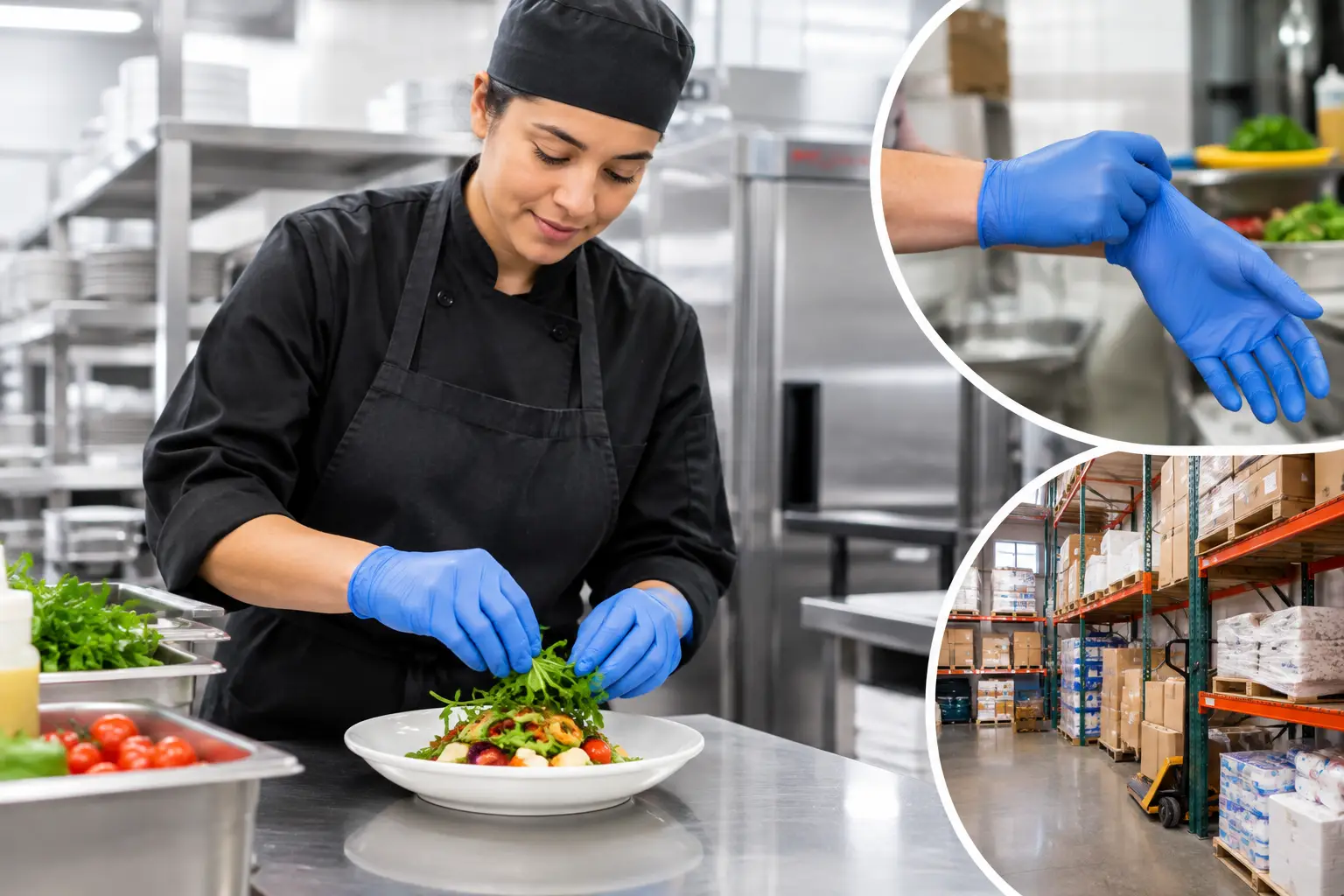
A box of gloves can disappear faster than expected during a busy service. When the backup case is missing, damaged, or the wrong size, staff lose time hunting for supplies and food handling becomes harder to manage. A dependable food safe disposable gloves supplier helps prevent that problem by treating gloves as a recurring kitchen essential, not a last-minute order.
For restaurants, hotels, caterers, schools, healthcare kitchens, and facility teams, the right supplier does more than drop off cases. It helps you choose practical products, keep par levels on track, and consolidate purchasing with the paper, disposables, chemicals, and hand-care supplies your operation already needs.
What Food-Safe Gloves Need to Do in a Commercial Kitchen
Disposable gloves are not a substitute for good handwashing or staff training. They are one part of a clean food-handling routine. Used properly, they give staff a protective barrier when handling ready-to-eat food, changing tasks, portioning ingredients, and working through high-volume prep.
The right glove depends on the job. A busy deli line may need frequent glove changes and easy dispensing. A prep crew handling acidic ingredients, raw proteins, or greasy foods may need a material and fit that holds up through the task. Housekeeping and dish areas may have entirely different glove needs, so do not assume one case can cover every department.
Comfort matters more than it may seem. Gloves that are too loose can make detailed prep awkward. Gloves that are too tight can tear or cause staff to avoid wearing them. When gloves are comfortable and easy to pull from the box, teams are more likely to use them consistently and replace them when a task changes.
What to Look for in a Food Safe Disposable Gloves Supplier
The product matters, but supply reliability matters just as much. A supplier should understand that running out of gloves in the middle of a shift creates a real operational problem. Before choosing one, look at how it handles product fit, inventory, delivery, and account support.
A Practical Product Selection
Your supplier should be able to help match glove options to food-contact tasks without pushing a one-size-fits-all answer. Ask whether the gloves are intended for food handling and review the product information for the specific use in your operation. Material, thickness, sizing, powder-free options, color, and dispenser style can all affect daily use.
A good conversation starts with how your team works. How many employees are on prep, the line, catering, or banquet service? How often do gloves change hands? Are there tasks where a higher-durability option makes sense? These details help prevent overspending on more glove than you need while avoiding thin, poorly fitting gloves that create waste.
Consistent Local Inventory
Availability is often the deciding factor. A supplier may offer a wide catalog, but that does not help when the products you use regularly are not available when you need them. For Arizona operators, local inventory can make purchasing more predictable and reduce the stress of scrambling for substitute products.
Ask how your supplier tracks recurring items. A restaurant with steady volume should not have to rebuild the same order from scratch every week. Regular delivery schedules, supply reviews, and clear communication about substitutions make it easier to maintain the right stock level.
Flexible Ordering That Fits Your Volume
Glove usage changes. Patio season, catering events, holiday traffic, staffing changes, and menu shifts can all raise consumption. A supplier should be flexible enough to support smaller replenishment orders as well as larger restocks when volume climbs.
Order minimums and delivery fees can also complicate routine purchasing. They may encourage teams to over-order, tie up storage space, or wait too long to restock. A better supply program lets you order based on what your operation actually uses, not an arbitrary threshold.
Support Beyond the Case Count
A supplier should be able to spot opportunities to simplify the supply room. Gloves often sit beside film, food containers, paper towels, hand soap, sanitizer products, and cleaning chemicals. Managing those categories through separate vendors creates more invoices, more deliveries, and more chances to miss an order.
Working with one supplier for key recurring goods gives managers a clearer view of spending and usage. It also makes it easier to adjust an order when the kitchen changes its workflow or the facility adds service volume.
Avoid the Common Mistakes That Drive Up Glove Costs
The lowest case price does not always produce the lowest operating cost. A glove that tears easily, fits poorly, or is used for every task can lead to excessive use and frequent replacement. On the other hand, buying a heavy-duty glove for simple, quick tasks can add unnecessary cost across hundreds of shifts.
Another common issue is ordering by habit. A manager may keep buying the same size mix even after staff turnover changes the team’s needs. Cases then sit unopened while the most-used sizes run out. Periodic supply checks can correct this before it becomes a service problem.
Storage also deserves attention. Keep cases clean, dry, and accessible to the teams that need them. If gloves are stored far from prep stations or buried behind unrelated supplies, staff may use more than necessary or pull from the wrong box. A simple, organized stock area supports better daily habits.
Finally, do not treat substitutions casually. If a regular glove is unavailable, the replacement should still suit the task, fit your dispensers where relevant, and be clearly communicated to the team. A supplier that knows your standard order can help make changes without disrupting the kitchen.
Build Gloves Into a Smarter Supply Program
The most efficient approach is to include disposable gloves in a broader recurring supply plan. Start by reviewing usage over a normal service period, then account for high-volume days and special events. From there, set a reasonable on-hand quantity and identify the products that should be delivered regularly.
This does not need to be complicated. The goal is to avoid two expensive extremes: emergency purchases and excess inventory. Your kitchen needs enough gloves to work confidently through service, but not so many cases that they take over valuable storage space.
It also helps to assign clear responsibility for monitoring supplies. The person who orders gloves should know when stock is getting low, which sizes move fastest, and whether staff are reporting problems with fit or performance. Feedback from the line and prep area is useful because it reveals issues that a purchase order never will.
Questions Worth Asking Before You Commit
When evaluating a supplier, ask these practical questions:
- Are the glove options appropriate for the food-handling tasks in our operation?
- Can we get the sizes, quantities, and dispenser formats our staff actually use?
- Is there local inventory supporting the items we order regularly?
- Can delivery be scheduled around our ordering patterns?
- Can we combine gloves with paper, foodservice disposables, hand care, and cleaning supplies?
- Will someone review our current purchasing and help identify unnecessary spend or ordering gaps?
The answers should be clear and specific. If a supplier cannot explain how it will help you stay stocked, manage changes, and reduce purchasing friction, it may only be selling boxes rather than supporting your operation.
Reliable Supply Starts With a Better Partner
Gloves are a small line item until they are missing at the wrong moment. Choosing a supplier that understands recurring kitchen needs gives your team one less problem to solve during service. It supports cleaner workflows, better stock control, and a simpler purchasing process across the operation.
Essential Supply Company helps commercial kitchens bring gloves, foodservice disposables, paper, hand care, chemicals, and service needs under one accountable supplier. With local inventory, flexible delivery, supply audits, and a free price comparison, the focus stays on keeping your operation prepared. Built on Trust, Driven by Quality.