
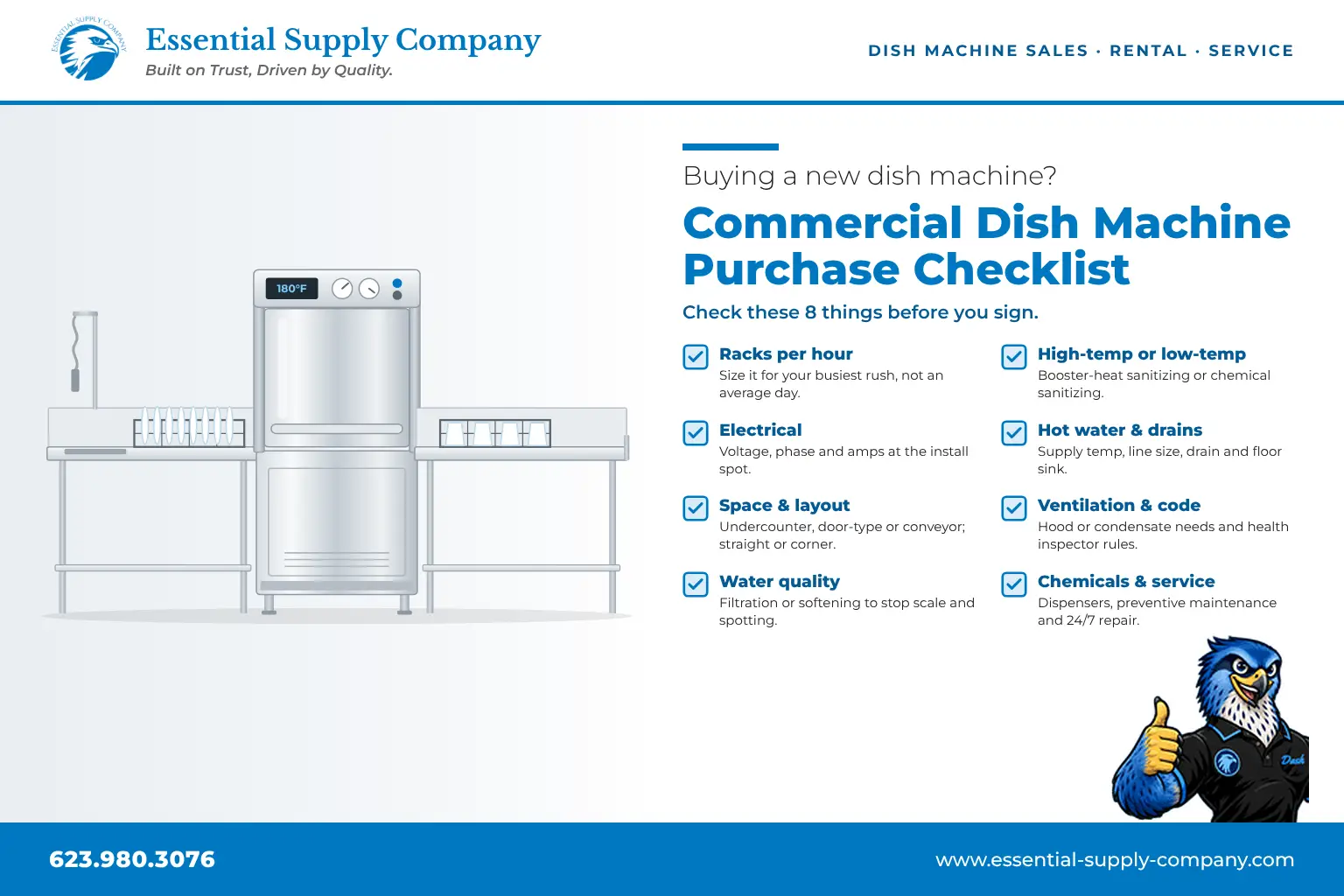
A commercial dish machine purchase is not just an equipment decision. It affects every service period, from how quickly cooks get pans back to whether servers have clean glassware when the dining room fills up. The wrong fit can create bottlenecks, raise chemical and water use, and leave staff working around downtime. The right fit supports a cleaner, faster operation without adding unnecessary work.
For restaurant owners and kitchen managers, the goal is simple: choose a machine that fits the operation you run now and can handle the pressure points you see every week. That means looking beyond the machine itself.
Start With Your Real Dish Volume
A busy lunch rush and a steady all-day café do not need the same dish machine. Before choosing equipment, look at the dishes, racks, pans, glassware, and utensils that move through your kitchen during the busiest part of the day. Daily cover counts help, but peak volume matters more.
A machine that keeps up during a slow Tuesday may fall behind on a Friday night. When racks start waiting, staff often resort to handwashing, reuse items before they are ready, or delay cleaning pots and pans until after service. That creates more labor, more clutter, and more pressure on the team.
Consider what makes up most of your warewashing load. A bar may need fast glassware turnover. A full-service restaurant may need capacity for plates, flatware, and cookware. A catering operation may have large batches at irregular times. Hotels, healthcare facilities, and schools may need consistent volume throughout long operating hours.
The machine should be sized for the work, not for a rough estimate of how many seats are in the building.
Match the Machine to Your Workflow
The best dish machine is one your staff can use without disrupting the kitchen. Placement matters as much as capacity. Look at where dirty items enter, where clean items need to go, and how employees move through the dish area during service.
A compact undercounter machine can make sense where space is limited and loads are smaller. Door-style machines often fit restaurants that need more capacity without building a large dish room. Larger operations may need a higher-volume setup that supports a continuous flow of racks.
There is no single right format. A larger machine may handle more volume, but it also needs enough space for landing dirty racks, sorting items, and storing clean racks. A smaller machine may cost less upfront, yet create a labor bottleneck if employees spend the shift waiting for cycles to finish.
Watch the steps around the machine, too. If staff must carry heavy racks across a crowded prep area, the workflow is already working against them. A good setup reduces extra handling and gives people a clear place to scrape, rack, wash, air dry, and put items away.
Make Room for the Whole Dish Area
Do not measure only the machine footprint. The dish area also needs room for racks, tables, drying space, chemical containers, and staff movement. Water lines, drainage, electrical requirements, and ventilation may affect placement as well.
This is where an on-site review is useful. It can reveal limitations before equipment arrives, rather than after a kitchen has already planned around it.
Look Beyond the Purchase Price
The cost of a machine is only one part of the decision. Over time, operating costs can have a much larger effect on the budget. Water use, energy use, chemical consumption, repairs, filters, labor, and downtime all belong in the conversation.
A machine that uses the right amount of chemistry and maintains consistent wash results can help control supply waste. One that is poorly matched to the operation may lead to rewashing, excess chemical use, cloudy glassware, or inconsistent results that staff try to solve by using more product.
Water quality also matters. Mineral buildup can affect equipment performance and cleaning results over time. In Arizona, water conditions can vary by facility, so filtration service should be considered as part of the equipment plan. Protecting the machine and maintaining consistent results can reduce avoidable service issues.
Ask what ongoing support includes. A dish machine needs regular attention, not just an installation date. The most useful program includes the equipment, properly managed warewash chemicals, staff training, water filtration where needed, and service support when something is not working as it should.
Plan for Service Before There Is a Problem
Every commercial machine eventually needs maintenance. The question is whether your operation has a clear plan when that happens. A dish machine out of service can slow the entire kitchen within minutes, especially during a busy shift.
Before completing a commercial dish machine purchase, ask who will install the equipment, train the team, maintain it, and handle future repairs. Buying equipment without a reliable service plan can leave managers calling multiple vendors while dishes continue to pile up.
A local partner should understand that the issue is not just the machine. It is the clean plates needed for the next seating, the pans needed for prep, and the labor hours being pulled away from other work. Service support should be connected to the supplies and systems that keep the dish area running.
Regular maintenance can also catch small issues before they become a full shutdown. Staff should know the basic daily practices expected for the equipment, while trained technicians handle service needs and more complex problems. That keeps employees focused on running the kitchen instead of trying to troubleshoot equipment under pressure.
Make Chemicals and Training Part of the Decision
Dish machines do not perform well in isolation. The chemical program, dispensers, water conditions, and employee practices all affect the result. If any one of those pieces is out of line, you may see spots on glassware, residue on dishes, repeat washing, or inconsistent cleaning.
This is why a machine purchase should include a conversation about the full warewashing program. The right chemical setup should match the machine and the type of ware being cleaned. Dispensing equipment should help control use so employees are not guessing or overusing product. Training should be practical and easy to repeat when new staff members join the team.
Training is especially valuable in hospitality, where turnover and shifting schedules are common. A quick, clear process gives staff confidence and helps managers maintain consistency without standing in the dish area every shift.
Essential Supply Company provides dish machine purchase, rental, repair, maintenance, chemicals, dispensing, filtration, and supply support through one local team. That means the people supporting the machine can also help manage the products and systems around it. Built on Trust, Driven by Quality.
Ask Questions That Protect Your Operation
Before committing to a machine, get clear answers about capacity, installation requirements, maintenance expectations, and supply needs. It also helps to ask how the machine will fit your current workflow, not an ideal version of it.
A useful evaluation should account for these practical questions:
- Can the machine keep up with your busiest service period?
- Does the dish area have enough room for racks, drying, and staff movement?
- What water filtration support may be needed for your facility?
- How will chemicals be supplied, dispensed, and monitored?
- Who handles installation, training, scheduled maintenance, and repairs?
- Can the same supplier support your paper, janitorial, hand care, and foodservice disposable needs?
The last question may seem separate from a dish machine, but it affects the day-to-day workload of the manager. Working with one supplier for recurring kitchen and facility needs can reduce purchase orders, simplify delivery planning, and make it easier to spot spending that has crept up over time.
Choose for the Shift You Need to Run
A commercial dish machine should make the back of house calmer, not more complicated. The right choice supports clean results, a steady flow of ware, and a team that can stay focused on guests and food instead of searching for clean pans or dealing with a breakdown.
Take the time to evaluate volume, layout, water, chemicals, and service together. A machine that fits the full operation will keep paying off in cleaner routines, better control of supplies, and fewer avoidable disruptions when the kitchen is at its busiest.