
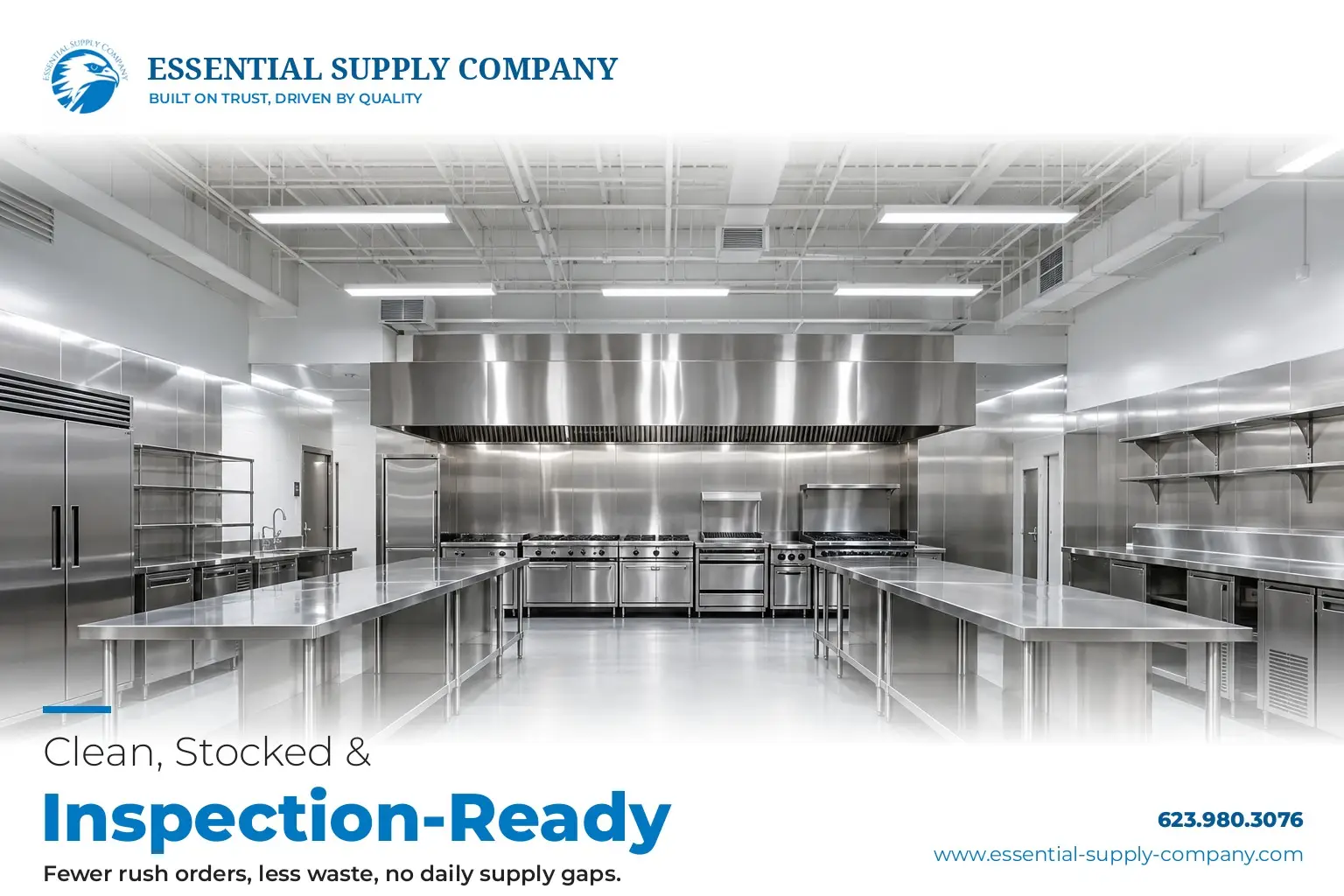
A lunch rush exposes every weak point in a sanitation program. The hand sink runs out of towels. The dish machine leaves ware looking questionable. A sanitizer bottle is empty at the worst possible time. Restaurant sanitation compliance supplies are not just items on a shelf. They are the products, equipment, training, and delivery plan that keep daily work moving when the kitchen is busy.
For restaurant owners and kitchen managers, the goal is practical: maintain a clean operation, give staff what they need, and avoid last-minute supply runs or preventable downtime. That takes more than placing a broad supply order once a month. It takes a program built around how your operation actually works.
What Restaurant Sanitation Compliance Supplies Should Cover
A complete sanitation supply program supports the flow of work from receiving and prep through service, warewashing, restrooms, and closing. If one area is missed, staff often improvise. That can lead to wasted product, inconsistent cleaning, and a facility that is harder to manage.
The core categories usually include warewashing chemicals, janitorial chemicals, hand care, paper products, gloves, cleaning tools, and foodservice disposables. Commercial dish machines and water filtration also matter because a disruption there can affect the whole kitchen quickly.
The right mix depends on the operation. A high-volume restaurant may go through dish and hand-care products quickly, while a bar may need closer attention to glassware flow and restroom supplies. A hotel kitchen, school, or healthcare facility may have different traffic patterns, cleaning schedules, and storage limits. Buying the same case quantities for every location or department rarely works well.
Warewashing Is More Than Clean Dishes
When dishes, glassware, utensils, and cookware do not move through the kitchen reliably, service slows down. Warewashing supplies should support consistent daily results, but the machine itself also needs attention. Chemical dispensing, water quality, scheduled maintenance, and staff use all affect performance.
A dish machine problem is not always a mechanical failure. It may be a supply issue, a chemical-management issue, or a training gap. Kitchen teams should not have to guess which one they are dealing with during a packed shift. A supplier that can provide chemicals, equipment service, and ongoing support helps narrow down the problem and keep it from repeating.
Hand Care and Paper Supplies Need Reliable Restocking
Handwashing areas only work when they stay stocked. Soap, sanitizer, towels, tissue, and dispensers are everyday basics, but they are easy to overlook until something is empty. That puts pressure on staff and makes the operation look unprepared to guests.
Paper ordering creates another common cost problem. Overstocking takes up valuable storage space. Under-ordering creates emergency purchases and inconsistent product use. Reviewing actual usage by area helps set better delivery quantities and keeps the right supplies available without turning the back room into a warehouse.
Chemicals Need Control, Not Guesswork
Commercial kitchens use different products for different surfaces and tasks. The challenge is not simply having chemicals on hand. It is making sure products are managed consistently, available where staff need them, and supported by clear training.
Chemical dispensing can help control overuse and reduce waste. When staff are using more product than needed, spending rises quietly over time. When they use too little or use the wrong product for the task, cleaning results suffer. A managed program gives kitchen and facility leaders more visibility into what is being used and why.
Build Your Supply Plan Around Real Shift Conditions
A useful sanitation plan starts with the pressure points in your operation, not a generic order guide. Walk the kitchen and facility during a normal service period. Look at what gets used fastest, where supplies run out, and which departments store duplicate or forgotten inventory.
Start with a few direct questions. Are staff leaving their stations to find towels, gloves, or cleaning products? Does the dish area fall behind when volume increases? Are paper products ordered by habit instead of usage? Do different shifts handle closing and cleaning differently? These answers identify the gaps that cost time and create inconsistency.
Then set par levels that fit your storage, delivery schedule, and demand. A par level is not a fixed number forever. It should change when menus, traffic, service hours, or staffing patterns change. A catering operation may need a different supply plan during event-heavy periods. A restaurant with seasonal patio traffic may use more disposables, paper, and hand-care products at certain times of year.
Why One Supplier Makes Compliance Easier to Manage
Working with separate vendors for chemicals, paper, gloves, dish equipment, and facility supplies can create blind spots. One supplier may deliver without knowing another item is running low. An equipment issue may get handled separately from the chemical program affecting the machine. Managers spend more time tracking orders, invoices, and delivery questions than they should.
A single supplier does not mean every operation needs the same program. It means there is one accountable point of contact who can see the bigger picture. Supply audits can identify duplicate spending, missed categories, and products that do not match actual use. Scheduled route delivery supports consistency, while flexible delivery options can better fit changing operational needs.
This approach also makes staff training more useful. Training has more impact when it is tied to the actual dispensers, products, equipment, and routines in the building. A quick explanation at installation is helpful, but follow-up matters too. Teams change, shifts get busy, and old habits return.
The Supplies That Most Often Create Avoidable Gaps
Some products are more likely than others to cause disruption because they are used constantly or stored in multiple areas. Managers should review these categories regularly:
- Warewashing chemicals and dish machine consumables
- Hand soap, sanitizer, towels, and tissue
- Surface-cleaning and floor-care chemicals
- Gloves, wipes, liners, and cleaning tools
- To-go packaging, film, napkins, and other high-turn foodservice disposables
These items do not need equal attention. A busy counter-service restaurant may focus heavily on napkins, packaging, and gloves. A full-service operation may have greater warewashing demand. The key is to track what interrupts work, not just what appears most often on invoices.
Equipment Support Belongs in the Sanitation Conversation
A clean kitchen depends on more than products. If a commercial dish machine is down, the impact reaches prep, service, labor, and guest experience. Managers may try to work around the issue with manual washing or disposable ware, but those workarounds can add cost and strain an already busy team.
For operations that rely on commercial dish machines, rental, maintenance, repair, and chemical support should be considered together. Water filtration service can also support consistent equipment operation where it is appropriate for the facility. The right service plan depends on machine usage, water conditions, volume, and the age of the equipment.
Essential Supply Company brings these pieces together for Arizona restaurants, hospitality teams, and commercial facilities. The team supplies the everyday products, supports dish machine and water filtration needs, trains staff, and follows up when the program needs adjustment. Local inventory and personal account support help keep the relationship practical rather than transactional.
Review the Program Before Problems Become Emergencies
Sanitation compliance is easier to maintain when supplies and service are reviewed before a shortage, delivery issue, or machine problem becomes urgent. A regular review can reveal slow-moving inventory, excessive chemical use, repeated stockouts, or departments ordering the same products separately.
It also gives managers a chance to prepare for changes. A new menu, expanded dining area, higher delivery volume, or shift in service hours can change supply usage quickly. Waiting until the first busy weekend after a change usually means paying more attention to problems than planning.
The strongest sanitation program is not the one with the longest supply list. It is the one your staff can follow on a busy night without hunting for products, guessing at procedures, or worrying about whether the next delivery will arrive. Built on Trust, Driven by Quality, that is the kind of operational support that gives restaurant teams room to focus on guests.