
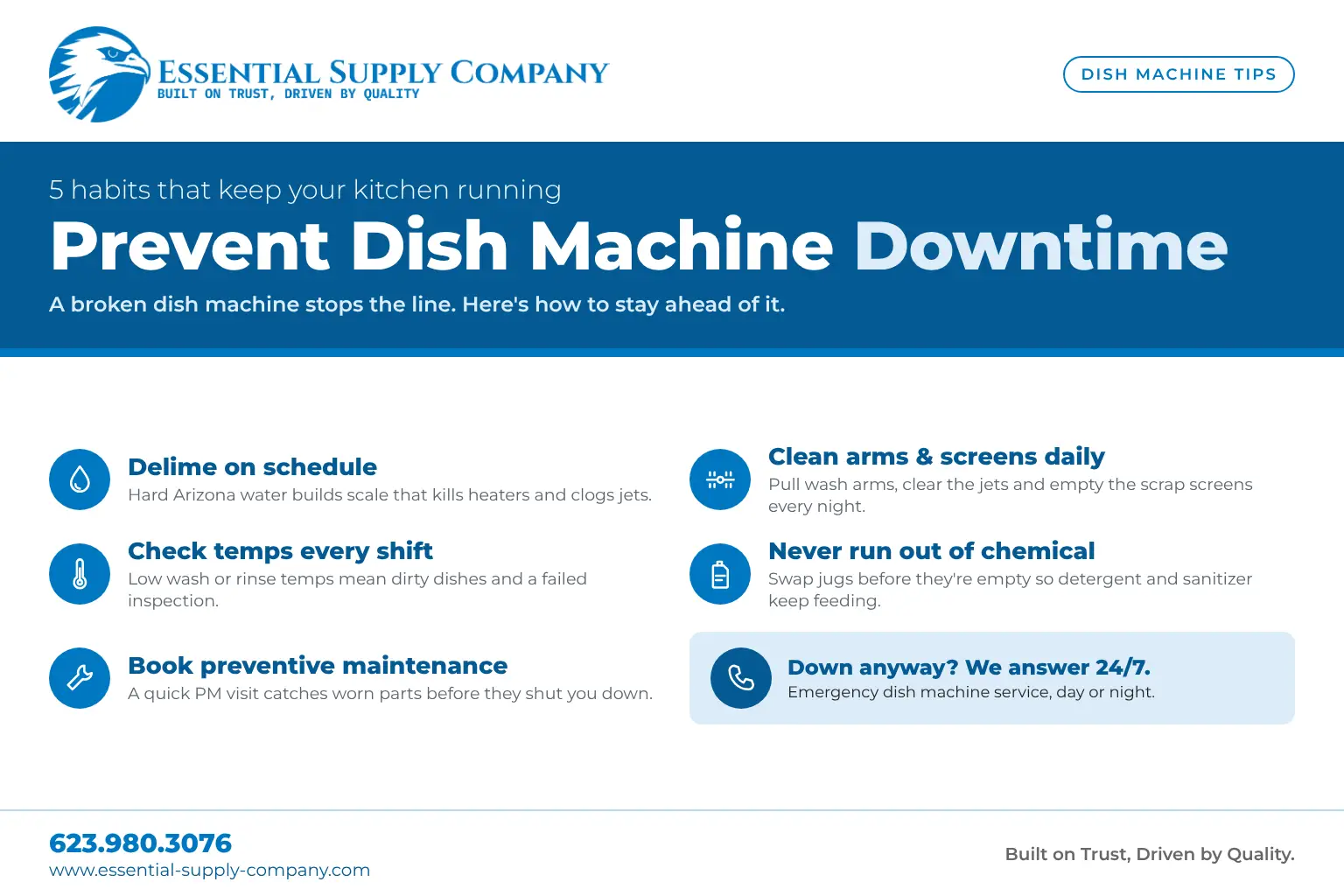
A dish machine rarely fails at a convenient time. It goes down in the middle of a packed dinner rush, after a banquet lets out, or when the morning crew is already short-handed. To prevent dish machine downtime, treat the machine as part of your daily operation, not a piece of equipment that only gets attention when dishes stop coming out clean.
When the machine is down, the problem spreads quickly. Clean dishware backs up, staff move to hand washing, labor costs rise, and service slows. In a hotel, restaurant, bar, healthcare kitchen, or school cafeteria, that disruption can affect the entire facility. The good news is that many downtime issues start with conditions your team can spot early: poor wash results, chemical feed problems, scale buildup, clogged components, or changes in water quality.
Prevent Dish Machine Downtime Before Service Is Affected
The goal is not to turn your kitchen team into repair technicians. It is to give them a simple routine for recognizing when something is changing and getting support before a minor issue becomes an outage.
Start by paying attention to what comes out of the machine. Cloudy glasses, food left on plates, streaks, spots, and poor drying are operational warning signs. They may point to a chemical issue, water condition, incorrect loading, or a component that needs service. If staff members keep rewashing racks, that is not just an inconvenience. It is extra labor, extra utility use, and a sign that the warewashing process needs attention.
A quick opening check also helps. The machine should be clean, operating normally, and ready with the supplies it needs. Staff should know where to report leaks, unusual sounds, error messages, low chemical product, or a drop in wash quality. Problems that get mentioned at the end of a shift often become bigger problems by the next rush.
Consistency matters more than a complicated checklist. Assign the responsibility to a role, not just a person. That way, the routine remains in place when schedules change or team members are out.
Keep Chemicals, Water, and Equipment Working Together
Commercial dish machines depend on more than the machine itself. Warewash chemicals, dispensing equipment, incoming water, and the condition of the unit all affect the result. When one part falls behind, the entire process suffers.
Chemical service is part of machine uptime
Running out of detergent or rinse additive can stop the dish area immediately. So can a dispenser that is not feeding product correctly. A container may look like it has enough product left, but if the feed line or dispensing equipment has a problem, wash results can decline fast.
The right chemical program should fit the machine, dish volume, soil load, and your operation’s needs. It should also include reliable replenishment and follow-up service. Staff training matters here because employees need to recognize that poor results are not always caused by the machine itself. Reporting the issue early helps the service team identify the cause and keep the dish area moving.
Do not let chemical ordering become a last-minute task. A scheduled delivery plan and regular supply review reduce the chance that a busy team discovers an empty container during service.
Water quality can create slow, expensive problems
Arizona water can be hard on commercial warewashing equipment. Mineral buildup may affect machine performance over time, contribute to spotting, and create extra strain on parts that need clean water flow.
Water filtration service is not a cosmetic add-on. For many operations, it is part of protecting equipment and maintaining a cleaner result on glassware, flatware, and dishes. The right filtration approach depends on your water conditions, machine type, and volume. A service partner should evaluate those factors rather than applying the same setup to every kitchen.
If you notice increased spotting, scale, inconsistent results, or recurring machine concerns, ask for the water side of the operation to be reviewed along with the dish machine. Treating only the visible symptom can lead to repeat service calls.
Train Staff for the Real Conditions of a Busy Kitchen
A dish machine performs better when staff know how to load it properly, clear food soil before washing, and keep the work area organized. These are basic habits, but they matter when the dish pit is moving fast.
Overloading racks, sending heavy soil into the machine, or using the wrong rack for the item can reduce wash quality and put unnecessary stress on the operation. The answer is not to blame employees who are trying to keep up. It is to provide clear training that fits the pace of the kitchen and is easy for new hires to follow.
Training should also cover what employees should not do. Team members should not try to force a machine through an unfamiliar mechanical issue or make adjustments beyond their role. A quick call for service is usually less disruptive than turning a manageable concern into a larger repair.
Managers can support this by making reporting simple. If an employee sees water where it should not be, hears an unusual sound, or notices that racks are not coming out clean, they should know who to tell and what happens next. When people believe concerns will be addressed, they report them sooner.
Build Maintenance Around Your Volume, Not a Calendar Guess
A low-volume café and a high-volume restaurant do not put the same demands on a dish machine. Neither does a hotel kitchen with banquet peaks or a healthcare facility with a steady daily flow. Maintenance needs should reflect how hard the machine is working, the water conditions it handles, and the consequences of downtime for your operation.
Scheduled maintenance gives a qualified technician the chance to inspect the machine, address wear, and identify issues before they interrupt service. It also creates a record of recurring concerns. If the same issue keeps returning, the solution may involve more than replacing a part. It may be a chemical setup, filtration need, operating practice, or equipment decision.
There is a trade-off to consider. Waiting until equipment fails may seem easier in the moment because it avoids planned service. But emergency downtime usually costs more in lost labor, disruption, and pressure on the kitchen team. A maintenance plan creates a predictable way to protect a critical part of your operation.
For some facilities, rental may be a better fit than purchasing because it can simplify access to equipment and ongoing service. For others, purchasing makes sense based on long-term operating needs. The right choice depends on your volume, budget approach, and how much service support you need after installation.
Use One Partner to See the Whole Problem
Dish machine downtime is often treated as a repair issue only. But the repair may be just one part of the solution. If the operation is also running low on chemicals, dealing with water quality concerns, missing staff training, or ordering from multiple suppliers without a clear schedule, the same problems can keep returning.
That is why a connected program matters. Essential Supply Company can support commercial kitchens with dish machine rental, purchase, repair, and maintenance, along with warewash chemicals, dispensing, water filtration service, training, and recurring supply delivery. The team can look at the whole dish area instead of treating every issue as an isolated service call.
This approach also gives managers fewer vendors to track. Paper products, hand care, janitorial supplies, foodservice disposables, and dish area needs can be coordinated through one supplier. Local inventory and flexible delivery schedules help reduce the risk of running out of the products your team depends on.
When to Call for Support
Call for service when wash results change without a clear reason, the machine leaks, displays an error, makes unusual sounds, fails to maintain normal operation, or requires repeated rewashing. Also call when your team is regularly compensating for the machine by hand washing or changing its routine to get acceptable results.
Do not wait for a complete shutdown to ask questions. Early support gives you more options and helps protect service, sanitation routines, and staff time. A good service partner will assess the machine, its chemical program, and the water conditions around it, then explain the next step in plain language.
Your dish machine should support the pace of your kitchen, not create another daily fire to put out. With regular attention, trained staff, dependable supplies, and service that follows through, you can keep dishes moving and your operation focused on guests. Built on Trust, Driven by Quality.