
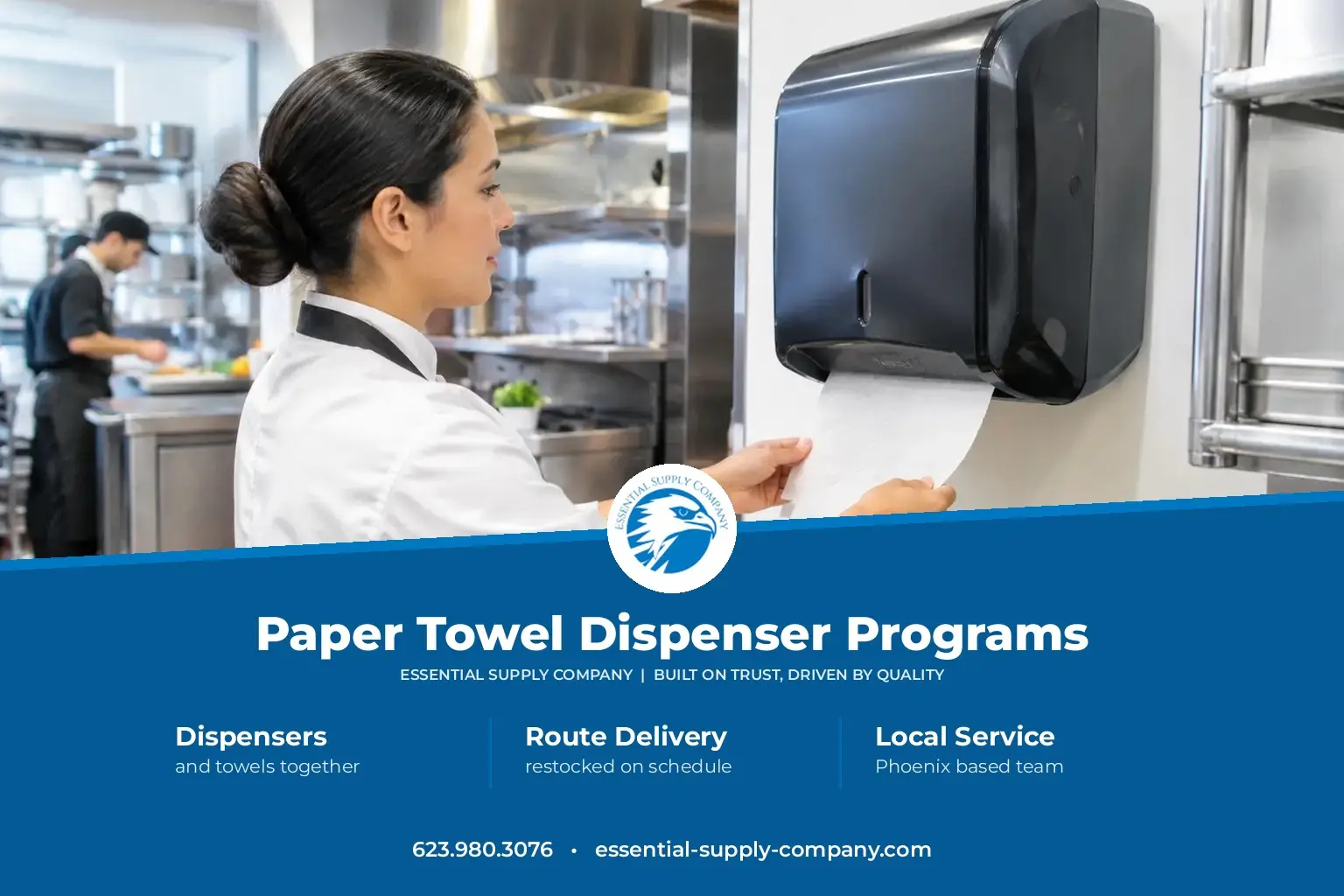
A paper towel dispenser can look like a small detail until it runs empty during a rush, jams in a busy restroom, or burns through a case of towels faster than expected. The right paper towel dispensers for restaurants help control paper use, keep handwashing areas ready, and give staff one less problem to manage during service.
For restaurant operators, the goal is not to buy the most complicated dispenser or the lowest-cost towel. It is to build a paper program that fits the way the operation actually runs. Traffic volume, available wall space, staff habits, and delivery reliability all matter.
Why the Dispenser Matters More Than It Seems
Paper towels are a recurring operating cost. When dispensers are poorly matched to the area, towels get pulled in bunches, dropped on the floor, or used for jobs that call for another type of paper product. That creates waste, clutter, and more frequent restocking.
A good dispenser controls portion size without slowing people down. It should be easy for employees and guests to understand, simple to refill, and dependable through a full shift. In a restaurant restroom, that means guests can dry their hands without struggling with a jammed roll. At a handwashing sink near the kitchen, it means employees can grab a towel quickly without touching a dispenser that is empty or difficult to load.
The dispenser also affects the work required behind the scenes. A model that needs constant attention can pull a manager or line employee away from more important tasks. One that holds the right towel format and is placed well can reduce checks, refills, and unnecessary paper use.
Choosing Paper Towel Dispensers for Restaurants
Start by looking at where the dispenser will be used. A dining room restroom has different needs than a prep sink, dish area, employee restroom, or bar handwashing station. Using one dispenser style everywhere can simplify ordering, but it is not always the right call.
Restrooms need capacity and a clean presentation
Guest restrooms usually need dispensers with enough capacity to handle traffic between regular checks. A dispenser that releases a controlled amount of towel can help prevent over-pulling and keep paper from collecting on counters and floors.
Appearance matters here, but reliability matters more. A clean, properly stocked dispenser supports the overall impression of the restaurant. If a guest finds an empty unit or loose towels piled near the sink, it can change how they view the rest of the operation.
Back-of-house stations need speed and durability
In the kitchen, staff need towels quickly. Handwashing areas near prep, dish, and bar stations may see repeated use all day. A dispenser should be placed close enough to the sink to be practical, but not where splash, heat, or tight traffic makes it difficult to reach.
High-volume towel rolls can reduce refill frequency in these areas. Still, capacity is only useful if staff can load the unit easily and it dispenses consistently. A dispenser that saves a few towels but causes jams during a rush is not doing its job.
Consider the towel format before choosing the hardware
Roll towels, folded towels, center-pull towels, and controlled-dispense systems all have a place in commercial operations. The better choice depends on traffic, user behavior, and the station itself.
Folded towels are familiar and easy to use, especially in lower-traffic areas. They can be a practical option when space is limited. The trade-off is that people may take more than they need, and stacks can be exposed if the dispenser is not loaded correctly.
Roll towel systems are often a stronger fit for busy restrooms and high-use staff areas because they hold more product. Controlled-dispense options can help manage usage, though they may require staff to understand the loading process and keep the unit maintained.
Center-pull towels can work well in certain utility areas where quick access matters. They are not always the best choice for guest-facing spaces, where a more contained presentation may be preferred.
Match Capacity to Real Traffic, Not the Floor Plan
A large restaurant does not automatically need the largest dispenser at every sink. A small restroom near a private event space may see limited use most days but heavy traffic during certain shifts. A bar restroom may experience concentrated traffic over a few hours. The dish area may have steady use from open to close.
Look at how often each station runs out now. If a dispenser is empty before scheduled checks, the issue may be capacity, towel consumption, placement, or the wrong product format. If a large roll sits unfinished for a long time in a low-use area, a smaller unit may make more sense.
This is where a supply audit can help. Instead of guessing based on a case count, review what is being used, where it is going, and which areas are creating the most waste. The answer may be a different dispenser, a better towel match, or a more practical delivery schedule.
Placement Can Reduce Waste and Missed Refills
Dispenser placement affects whether people use towels properly and whether staff notice low inventory before the unit goes empty. The best location is visible, accessible, and convenient to the sink or work area.
In restrooms, make sure the dispenser does not force guests to cross the room with wet hands. In the kitchen, avoid placing it behind equipment, around corners, or in a spot where an open door blocks access. If the person responsible for refilling must move supplies across the building every time, the station is more likely to be missed.
Keep a reasonable backup supply close to high-use areas when storage allows. This does not mean filling every cabinet with random cases of paper. It means organizing enough product where staff can restock quickly without opening a new case during a rush.
Standardize Where It Makes Sense
Restaurants often end up with several towel formats because products were purchased as needs came up. One restroom may use a folded towel, another a roll, and the back of house may use a third option. That can make ordering, storage, and refilling harder than it needs to be.
Standardizing dispenser and towel choices across similar areas can simplify training and reduce ordering mistakes. Staff know which refill belongs in which unit. Managers can keep fewer paper items in storage. Deliveries become easier to check against actual needs.
There are limits. A high-traffic restroom may need a different system than a small employee washroom, and a utility sink may call for another format entirely. The point is not to force every area into one product. It is to eliminate unnecessary variation.
Train Staff on the Small Details
Even a reliable dispenser can become a problem when it is loaded incorrectly or checked too late. Include paper towel stations in opening, closing, and restroom-check routines. Staff should know which towels go in each unit, where backup stock is kept, and who should report a dispenser that is damaged or not dispensing correctly.
This does not need to become a long training session. Clear labels in the supply area and a consistent product setup go a long way. When towels, tissue, hand soap, and cleaning supplies are managed together, the team can spot gaps before they affect service.
Work With a Supplier That Can Keep the Program Consistent
Paper products work best as part of a larger supply plan. A restaurant should not have to chase separate vendors for towels, tissue, hand care, cleaning products, and foodservice disposables while also managing equipment service needs.
Essential Supply Company helps Arizona operators organize recurring paper and facility supplies around how their locations run. Local inventory, flexible delivery schedules, supply audits, and personal account support make it easier to keep the right towels and dispensers in place. When the paper program is reviewed alongside chemical, hand care, and janitorial needs, operators get a clearer view of where spending and waste are coming from.
The right dispenser is the one staff do not have to think about during service. It stays stocked, dispenses the right amount, fits the station, and helps the operation stay clean and prepared. That is a small operational win that adds up every day.