
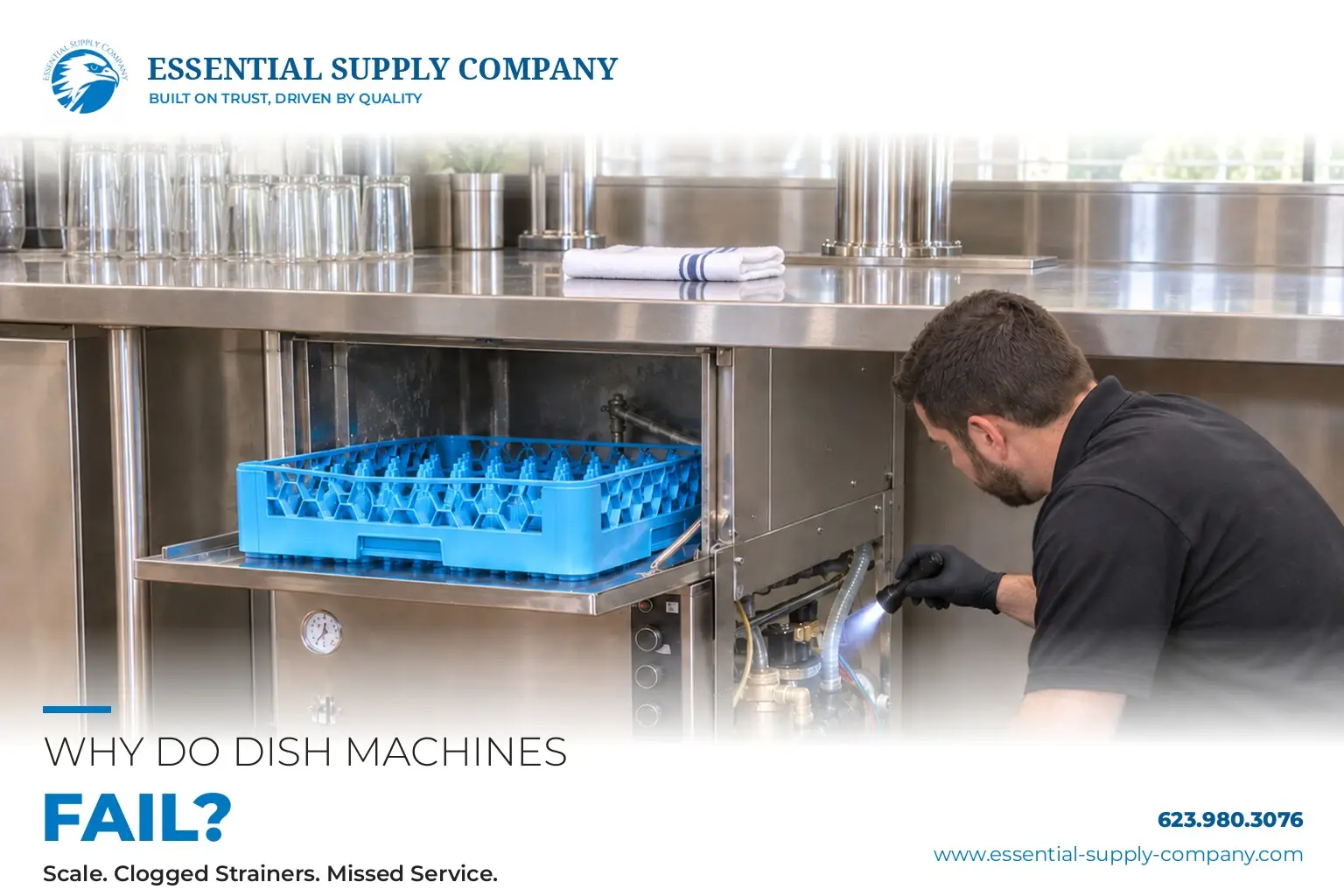
A dish machine rarely fails at a convenient time. It fails during the lunch rush, after a banquet lets out, or just as the night crew needs to close. When operators ask, why do dish machines fail, the answer is usually not one dramatic breakdown. It is a small operating issue that went unnoticed until the machine could no longer keep up.
For a restaurant, hotel, bar, or healthcare kitchen, dish machine downtime affects more than clean plates. It slows service, adds labor pressure, creates sanitation concerns, and can leave staff washing by hand when they already have too much to do. Knowing what causes trouble helps managers catch problems early and keep the operation moving.
Why Do Dish Machines Fail So Often?
Commercial dish machines work hard. They handle heat, water, food soil, chemicals, and repeated cycles for hours at a time. That workload is normal, but the machine depends on several systems working together: water supply, drainage, chemical dispensing, filtration, heating, and daily cleaning.
A problem in any one area can show up as cloudy glassware, poor wash results, leaks, slow cycles, odors, or a machine that stops running altogether. The right response depends on the symptom. Some issues point to daily operating habits. Others need a trained service technician before a minor interruption becomes a full shutdown.
Water Quality Creates Problems That Build Over Time
Water is one of the biggest reasons dish machines lose performance. Arizona water conditions can cause mineral scale to build inside the machine, on heating components, and around spray openings. As scale builds, the machine may take longer to heat, use more energy, and deliver inconsistent results.
Poor water quality can also leave spots on glasses and flatware, even when the wash cycle appears to be running normally. Staff may assume the machine needs more chemical, then overuse product trying to correct a water issue. That adds cost without fixing the cause.
Water filtration service helps protect the machine and support better results. It is not a one-time fix, though. Filters need regular attention, and the right setup depends on the machine, water conditions, volume, and the type of ware being washed.
Chemical Problems Are Often Dispensing Problems
Warewashing chemicals only work when the right product reaches the machine at the right point in the cycle. Empty containers, clogged pickup lines, worn tubing, or a dispenser that is not calibrated correctly can lead to poor cleaning and sanitizing results.
This is easy to miss during a busy shift. The machine still runs, but dishes come out with residue, food soil, streaks, or spots. Staff may rerun racks several times, which wastes water, labor, and time. In some cases, the team may switch to hand washing because they do not realize the chemical feed is the issue.
Chemical management should include consistent checks, clear product storage, and staff training on what normal results look like. It also helps to work with a supplier that services the dispensing equipment instead of simply dropping off chemical containers and leaving the rest to the kitchen.
Food Soil and Debris Restrict Performance
Dish machines are built to wash ware, not process large amounts of food waste. When plates are not properly scraped or pre-rinsed, food particles collect in filters, strainers, spray arms, and drain areas. Water flow drops, wash pressure changes, and the machine has a harder time doing its job.
The result may look like a machine failure, but it is often a preventable performance problem. A rack of dishes may come out with bits of food still attached. Glasses may feel gritty. The machine may drain slowly or develop an odor that carries into the dish area.
This does not mean staff need another complicated task list. It means the dish area needs a practical routine that fits the pace of the operation. Clear expectations at the scrape station and a simple end-of-shift cleaning process can prevent many avoidable service calls.
Skipped Daily Cleaning Shortens Machine Life
A commercial dish machine needs daily care, even when it appears to be working well. Filters, screens, wash areas, and exterior surfaces collect soil every day. Leaving buildup in place can affect water circulation, create odors, and put extra strain on pumps and other components.
The trade-off is real: when the kitchen is short-staffed, stopping to clean the machine can feel difficult. But skipping that routine usually costs more later in repeat washes, lower productivity, and unplanned repairs. The goal is not to turn kitchen managers into repair technicians. It is to make sure the team knows the few daily actions that protect the equipment.
Training matters here. New dishroom staff may not know what to remove, clean, inspect, or report at the end of a shift. A short onsite review can help the whole team use the machine consistently, especially in kitchens with frequent turnover.
The Mechanical Issues Behind Dish Machine Downtime
Some failures are the natural result of wear. Pumps, hoses, seals, heating components, controls, and doors all work through thousands of cycles. Eventually, parts need service or replacement. The problem is not that equipment wears out. The problem is waiting until a small warning sign becomes an emergency.
Leaks around the machine, unusual noises, repeated error messages, slow filling, weak wash action, or inconsistent temperatures deserve attention. A machine that trips power, drains poorly, or stops mid-cycle should be taken seriously. Continuing to push equipment through a problem can cause more damage and leave the kitchen without a working dish area at the worst possible moment.
Scheduled maintenance gives a technician the chance to spot worn parts, check operating performance, and address issues before service is interrupted. Rental, purchase, repair, and maintenance programs each have a place. The right choice depends on the age of the machine, the volume of the operation, and how much predictability the operator needs from month to month.
Installation and Capacity Can Be the Hidden Cause
Not every dish machine problem begins inside the machine. Water pressure, drain conditions, electrical supply, ventilation, and the layout of the dish area all affect performance. A machine may be asked to handle more racks per hour than it was selected for. It may also be placed in a workflow where racks arrive backed up and staff rush the loading process.
When a kitchen changes its menu, adds catering volume, extends hours, or takes on more banquet business, the dish area should be reviewed too. What worked for a smaller operation may not keep pace after growth. Repeated downtime can be a sign that the equipment or setup no longer matches the workload.
How to Catch Trouble Before the Machine Stops
Kitchen managers do not need to diagnose every mechanical issue. They do need a way to recognize when results are changing. Pay attention to recurring spots, film on glassware, food left on dishes, water pooling near the machine, slower cycle times, or staff needing to rewash more racks than usual.
It also helps to ask the dishroom team what they are seeing. They notice changes first because they are closest to the machine all shift. If they report that the machine sounds different, does not heat normally, or is leaving ware dirty, treat that feedback as an operating signal, not just a complaint.
A consistent service partner can connect the dots between the machine, chemicals, water filtration, staff training, and the supplies that keep the dish area running. That coordination matters because poor wash results are not always an equipment problem, and an equipment repair alone will not solve a chemical or water-quality issue.
A Better Plan for Reliable Warewashing
Reliable warewashing comes from routine attention, not luck. Keep chemicals stocked and dispensing correctly. Maintain water filtration. Train staff on normal machine operation and daily cleaning. Schedule maintenance before peak seasons and address changes in wash results early.
Essential Supply Company supports commercial kitchens with dish machine service, warewash chemicals and dispensing, water filtration, staff training, and local supply support. Built on Trust, Driven by Quality. When the dish area runs consistently, your team can focus on serving guests instead of managing another interruption.